The Build / Fifty-two years of construction
Who actually did the work
Civilian Conservation Corps and Works Progress Administration camps supplied much of the labour, and the camp locations track the construction sequence.
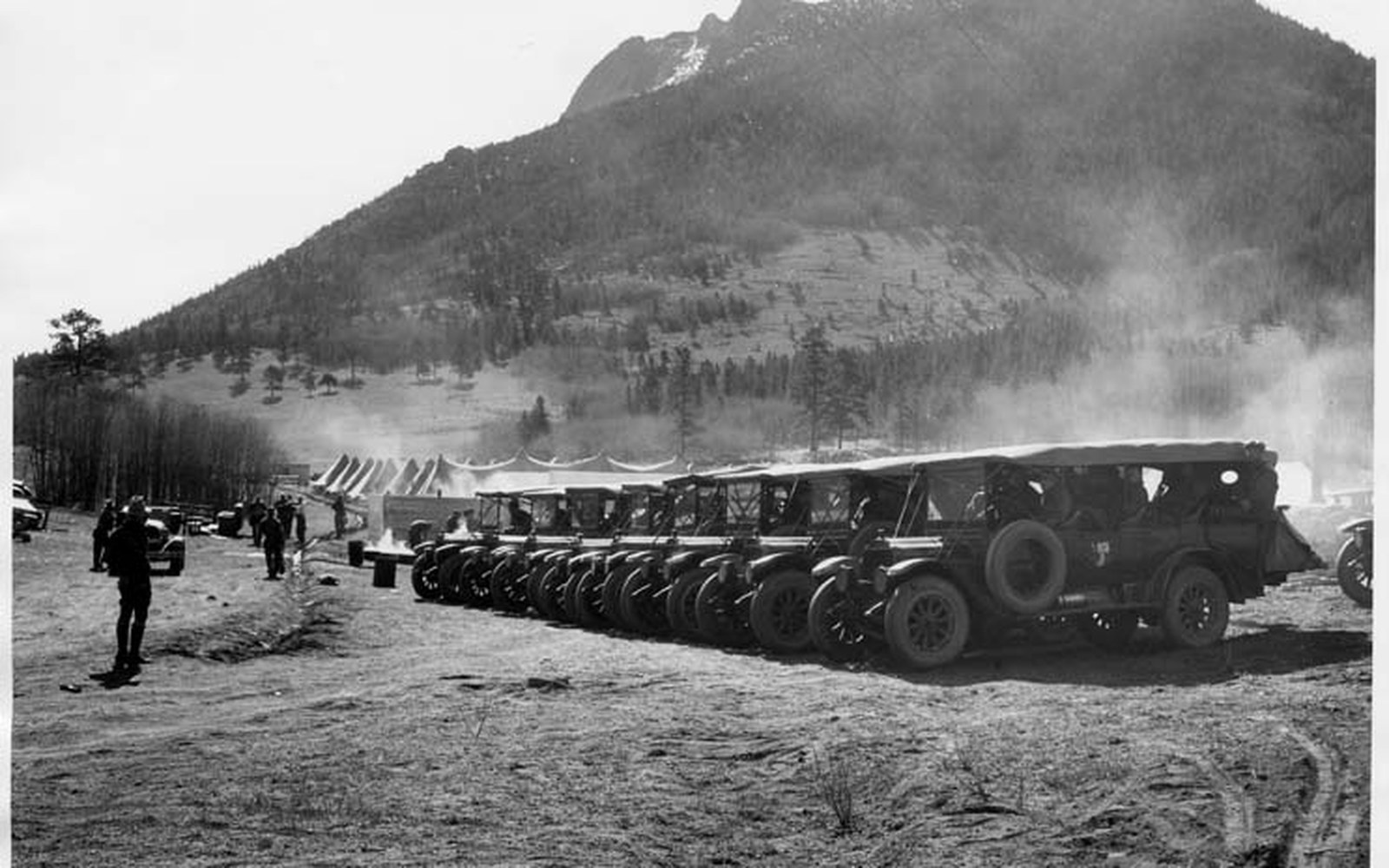
A Civilian Conservation Corps motor pool. Enrollees lived in camps that moved as the line advanced.
Photo: Rocky Mountain National Park, Civilian Conservation Corps workers ready to depart (2) · Wikimedia CommonsThe agencies behind the shovels
The Blue Ridge Parkway did not build itself with federal intention alone. Two New Deal labour programmes supplied most of the hands: the Civilian Conservation Corps, which enrolled young unemployed men in quasi-military camps, and the Works Progress Administration, which drew from a broader adult workforce that included skilled tradesmen, quarrymen and experienced road builders. Both agencies answered to a Depression-era logic — put people to work on something durable — and the Parkway was exactly the kind of project that logic needed.
Construction began in 1935 and the CCC was already operating when the first grading contracts were let. The Corps ran residential camps, typically of around two hundred men, sited within reach of the active construction front. As the roadbed pushed south through Virginia and into North Carolina, camp locations shifted with it: the pattern of camps is essentially a map of the construction sequence, each one planted within daily reach of unfinished ground. The men were not engineers; they cleared right-of-way, graded slopes, planted roadsides, built drainage structures and laid stone — the kind of sustained physical labour that kept a long linear project moving.
The Works Progress Administration contributed a different profile of worker: older, often already skilled, working under foremen rather than in military-style companies. WPA crews handled more of the finish work — masonry facing on culvert headwalls and parapets, bridge abutments, the dressed stonework that gives structures along the road their characteristic weight and texture. Where the CCC moved a lot of earth, the WPA left the details that are still visible.
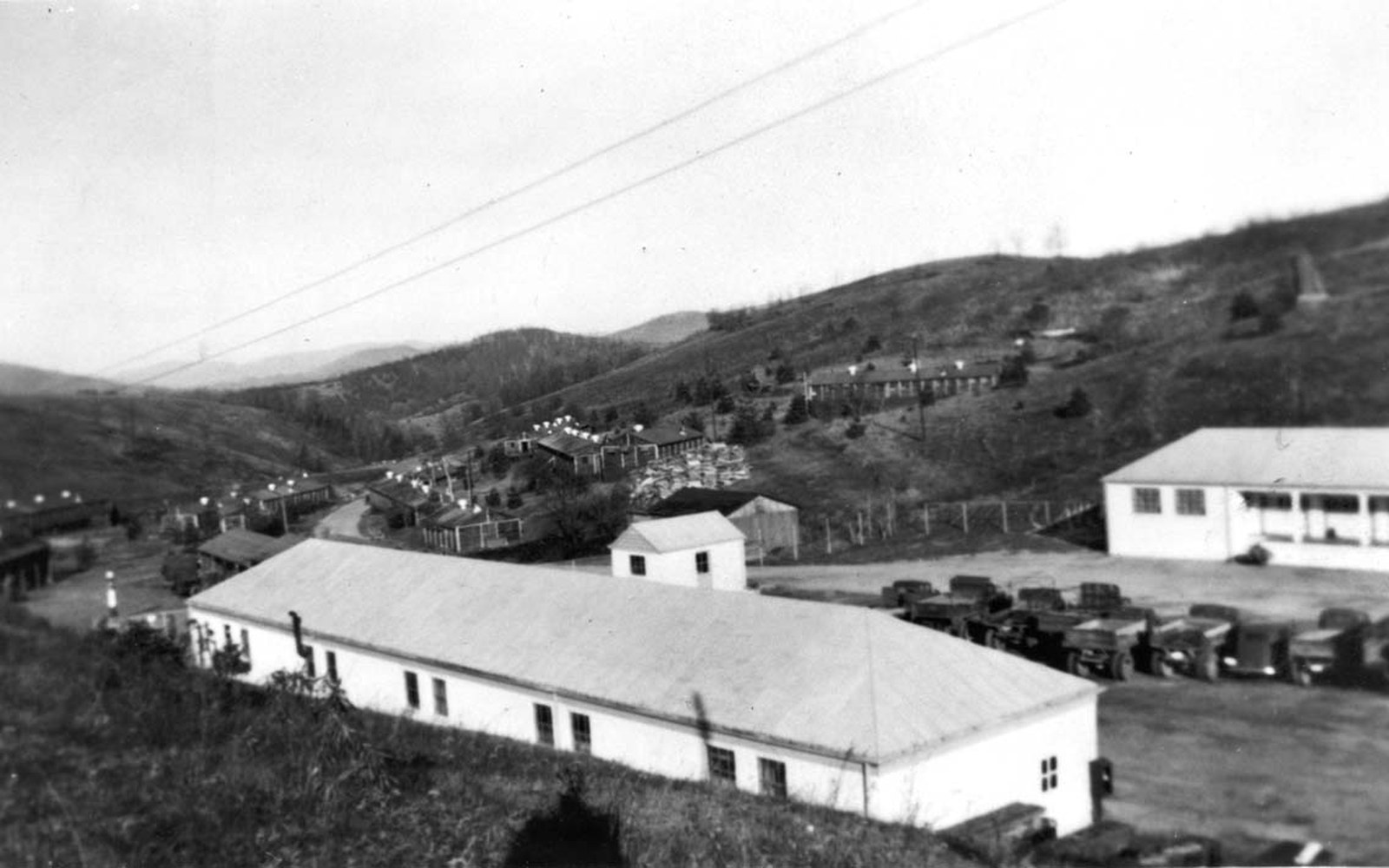
A construction camp in the late 1930s. Barracks, a mess hall and a line of trucks — the road arrived as a payroll first.
Photo: CCC Camp, ca. Late 1930s (76423074-a50c-6aa5-932d-b15c221bb510) · Wikimedia CommonsItalian and Spanish hands in the stone
Among the most technically accomplished workers were immigrant stonemasons, many of Italian and Spanish origin, who were brought in specifically for faced stonework. Their craft is still standing: the culvert headwalls, tunnel portals and low parapets that line the road were built to last, and they have. The stone was almost always local — sourced from cuts made during grading — which is why the masonry colour shifts as the road moves through different geology. The decision to face utilitarian structures in cut stone was a design specification, not an accident; the Parkway's landscape architects insisted on it as a way of keeping the road from looking industrial.
The Civilian Conservation Corps drew its enrollees from relief rolls, paid them thirty dollars a month (most of which was sent home to their families), and housed them in camps that were run along US Army lines. At its peak the programme had thousands of men working on parkway-related tasks across dozens of Virginia and North Carolina camps. The Works Progress Administration ↗ operated on different terms — workers were paid prevailing wages for their trade and lived in their own communities, not camps — which meant WPA crews tended to concentrate where existing settlements were nearby.
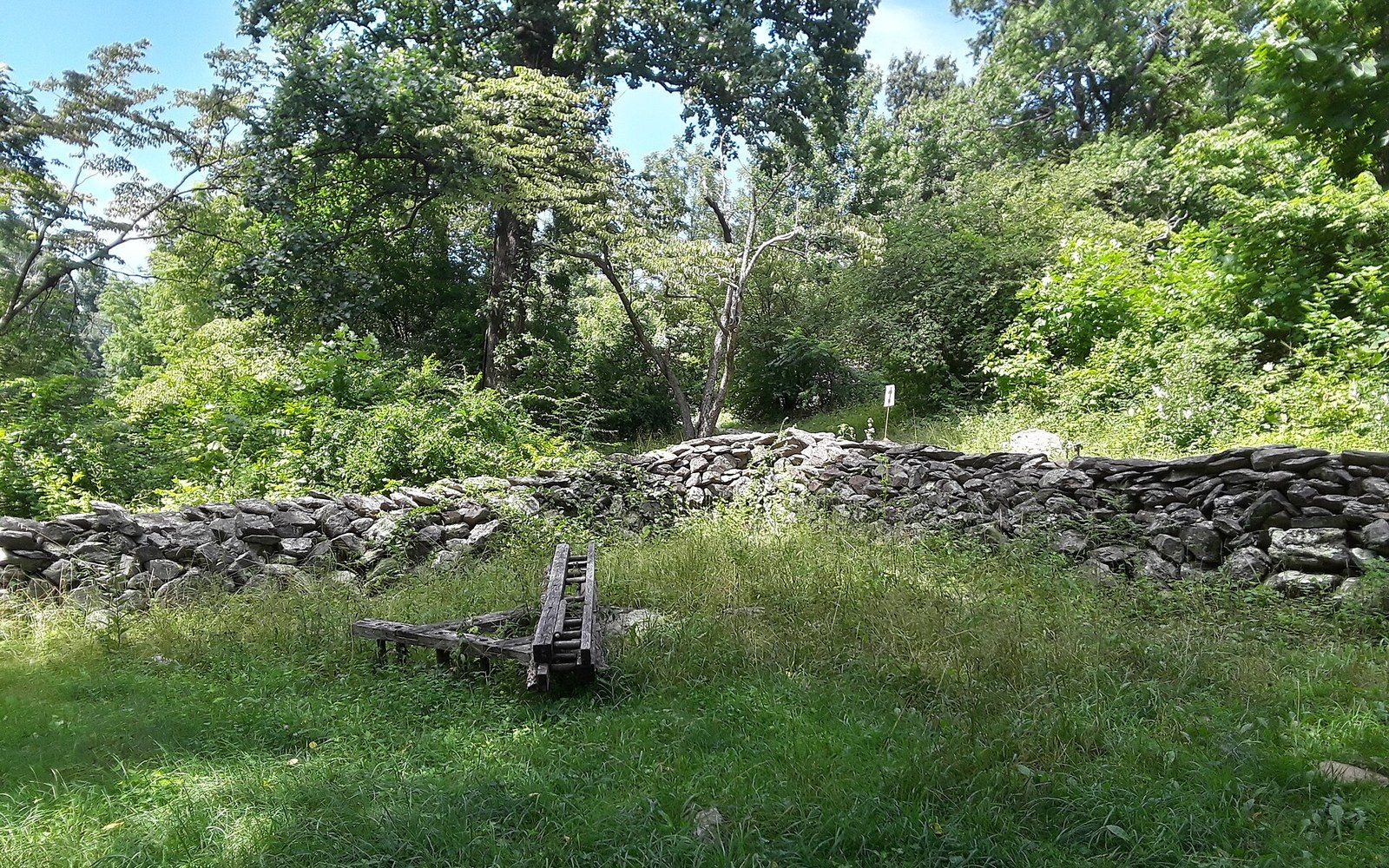
A field wall at Humpback Rocks. The Parkway kept walls like this and built new ones to match them.
Photo: Stone wall, Farm Museum at Humpback Rocks Visitor Center, Blue Ridge Parkway · Wikimedia CommonsWhat they built and what remained
The two programmes together account for most of what you see from the road that is not the road surface itself: the stone bridges, the grass shoulders kept just wide enough, the plantings that make a constructed object read as native landscape. Credit for the design vision goes to landscape architects Stanley Abbott and Gilmore Clarke, among others, but credit for execution belongs to men whose names are not on any milepost.
Construction would continue under different arrangements for decades — the Linn Cove Viaduct did not close the last gap until 1987, by which time the CCC and WPA were forty years dissolved. But the character of the road, the grain of its stonework and the profile of its graded slopes, was set by the early years of labour-intensive federal work. The camps are gone. The stone is not.
More in The Build