The Build / Fifty-two years of construction
Begun as public works
Construction began in 1935 as a Depression-era public-works project, which set both the labour supply and the political pressure to keep it moving.
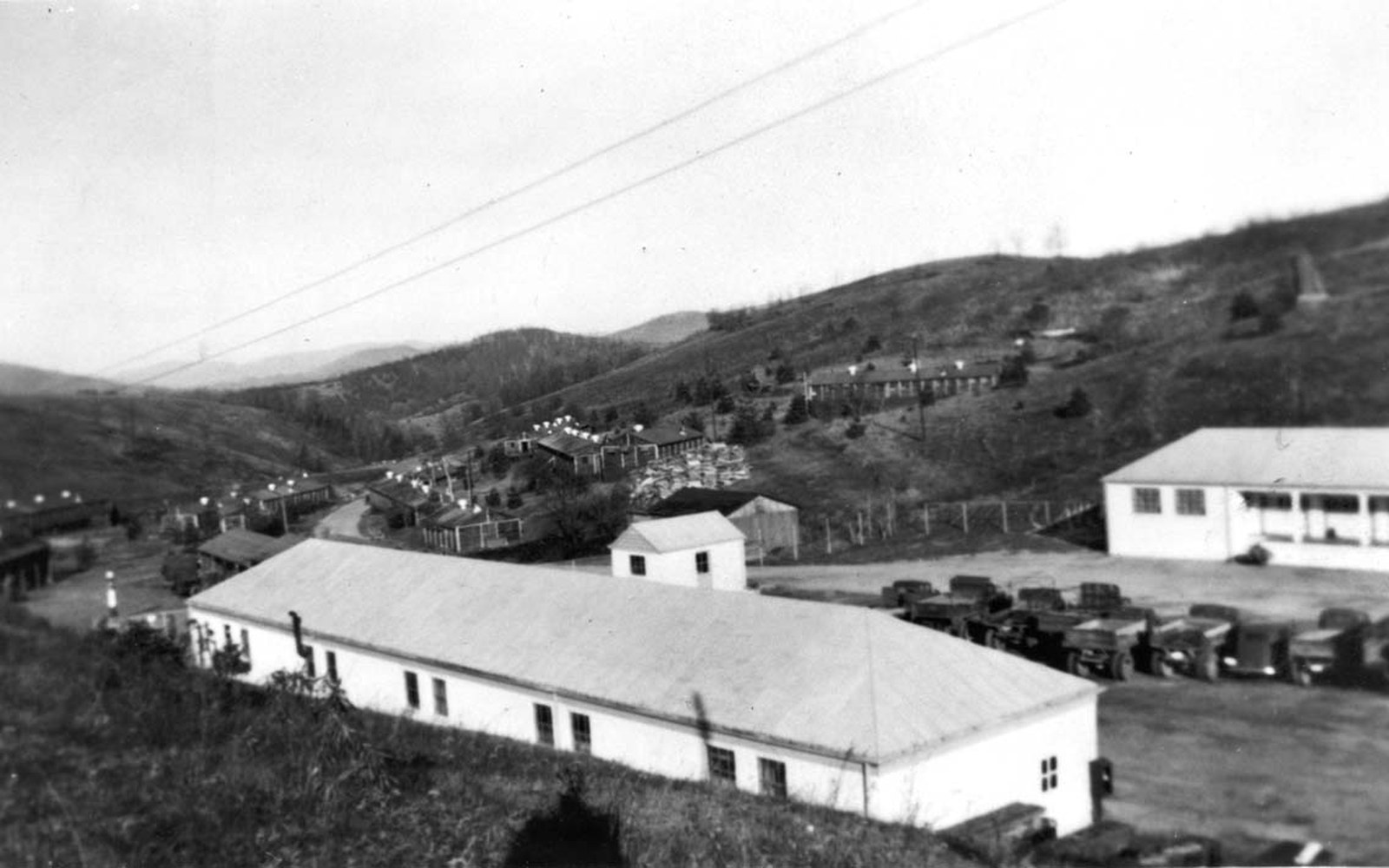
A construction camp in the late 1930s. Barracks, a mess hall and a line of trucks — the road arrived as a payroll first.
Photo: CCC Camp, ca. Late 1930s (76423074-a50c-6aa5-932d-b15c221bb510) · Wikimedia CommonsA road built when the country needed the work
Construction on the Blue Ridge Parkway began on 11 September 1935, when ground was broken near Cumberland Knob in North Carolina — a date that means more when you know what was driving it. The Parkway was not primarily a scenic project in its origins. It was employment. The New Deal administration needed visible, photogenic, geographically dispersed work, and a mountain road threading through one of the most economically distressed regions in the United States filled every one of those requirements at once.
The decision to connect Shenandoah National Park in Virginia to Great Smoky Mountains National Park in North Carolina had been made the previous year, driven largely by Harold Ickes at the Interior Department and by the political weight of Virginia and North Carolina competing to host the route. What settled the argument — such as it was — was where the labour already sat. The southern Appalachians had been hard before the Depression; the Depression made them desperate. A road-building programme here was not bringing workers to a project; it was bringing a project to workers who were already there and already enrolled in federal relief rolls.
The Civilian Conservation Corps supplied much of the early muscle. CCC camps were established along the corridor, housing young men who cleared the right-of-way, graded shoulders, shaped the characteristic rounded profile of the roadbed, and built the first infrastructure — culverts, retaining walls, small bridges — in the cut-stone style that would become the Parkway's aesthetic signature. Their work was supervised by National Park Service engineers and landscape architects, but the physical knowledge embedded in it was local: men who understood the terrain because they had grown up on it.
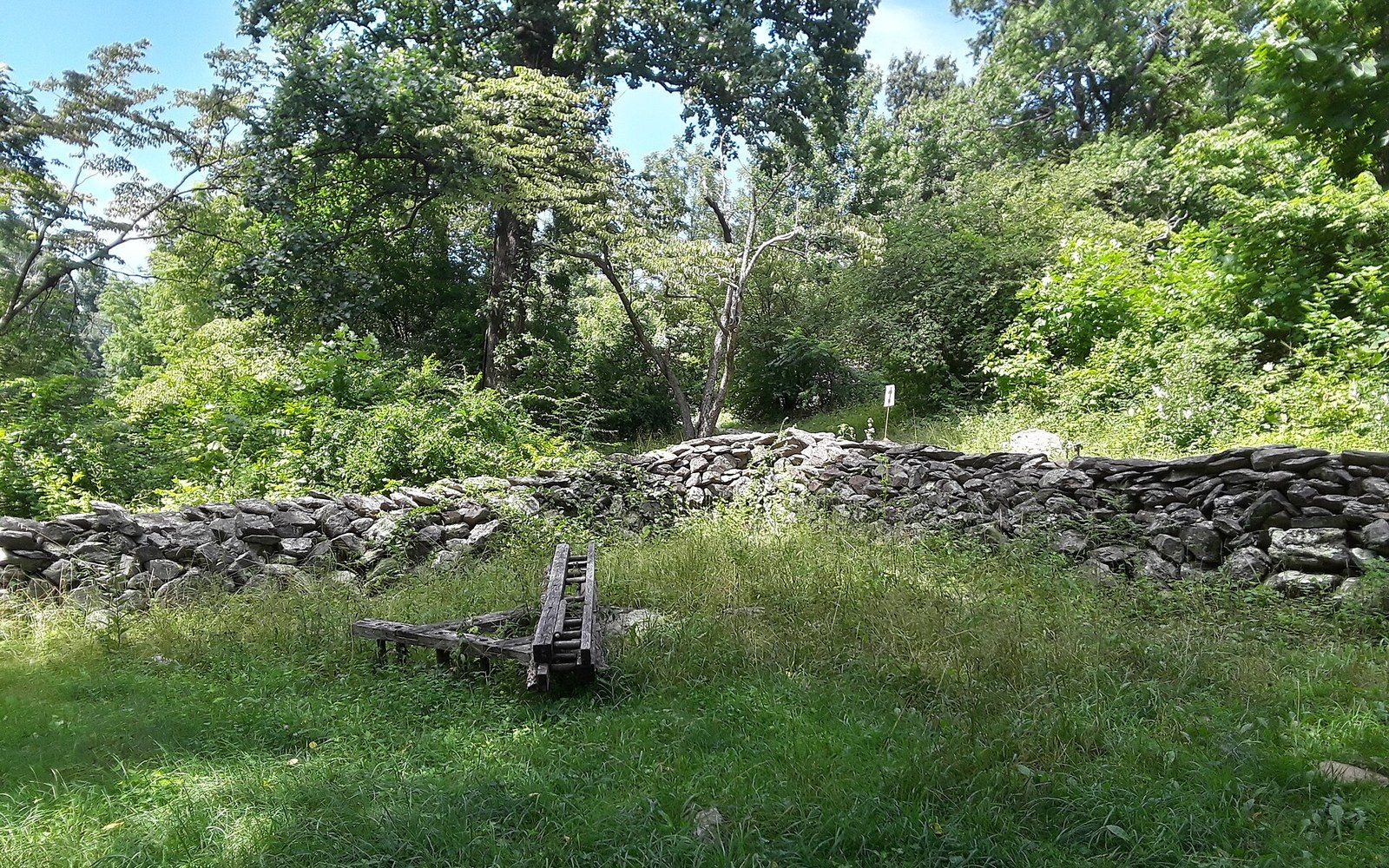
A field wall at Humpback Rocks. The Parkway kept walls like this and built new ones to match them.
Photo: Stone wall, Farm Museum at Humpback Rocks Visitor Center, Blue Ridge Parkway · Wikimedia Commons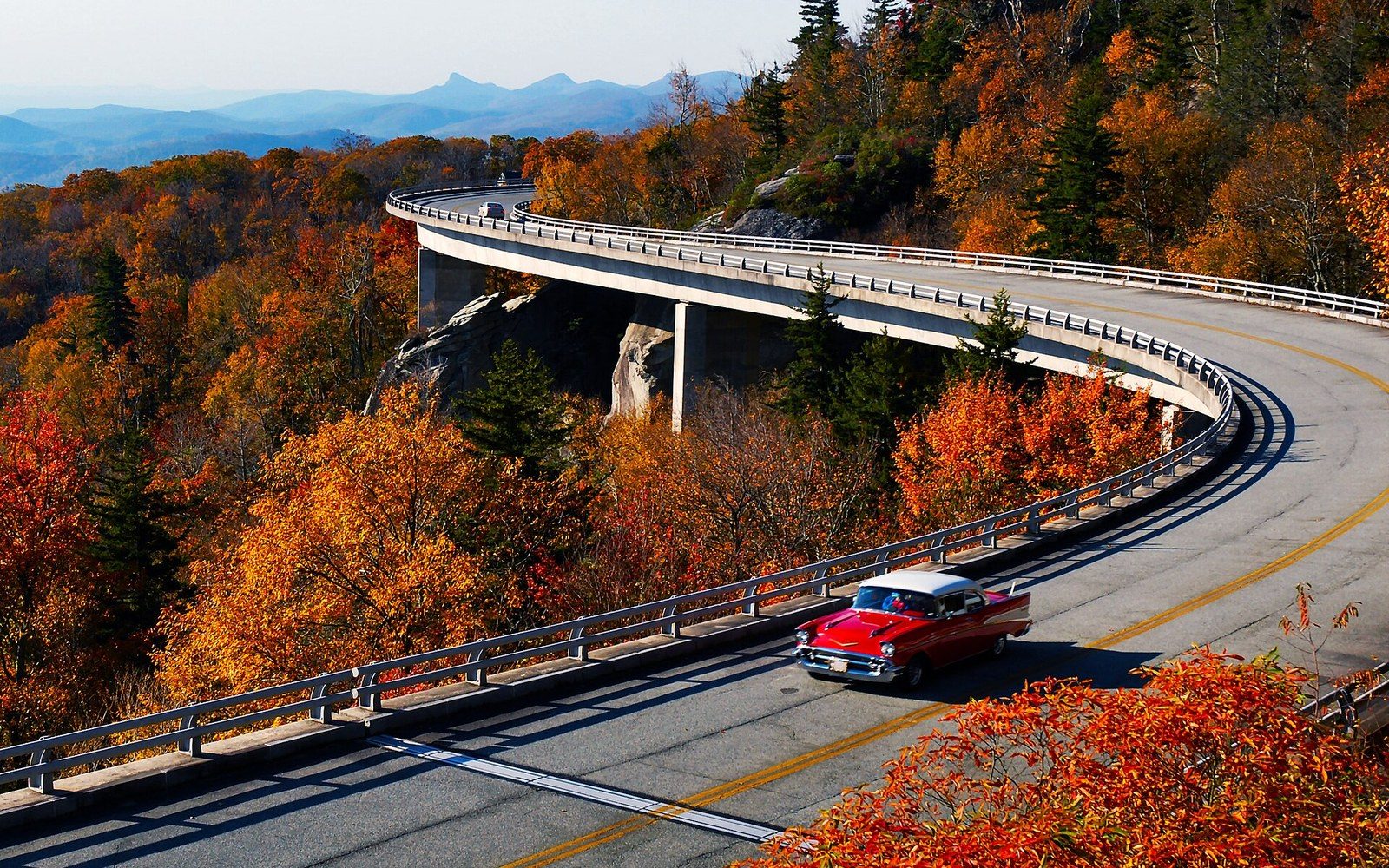
The reverse S-curve at milepost 304.4. Seven piers carry 1,243 feet of deck around the flank of Grandfather Mountain.
Photo: MDB 2658-Linn-Cove-Viaduct-Red-Car-4x3 · Wikimedia CommonsThe Works Progress Administration provided a parallel and overlapping labour pool, particularly for skilled trades. The stonework on the Parkway's parapets, culvert headwalls and tunnel portals carries the marks of craftsmen whose techniques came from Italy and Spain by way of earlier American infrastructure projects, but the WPA framework is what organised and paid them during the Parkway's first decade of construction. Both programmes operated under intense pressure to show results — to generate numbers that could be reported to Congress, photographs that could appear in newspapers, miles that could be counted.
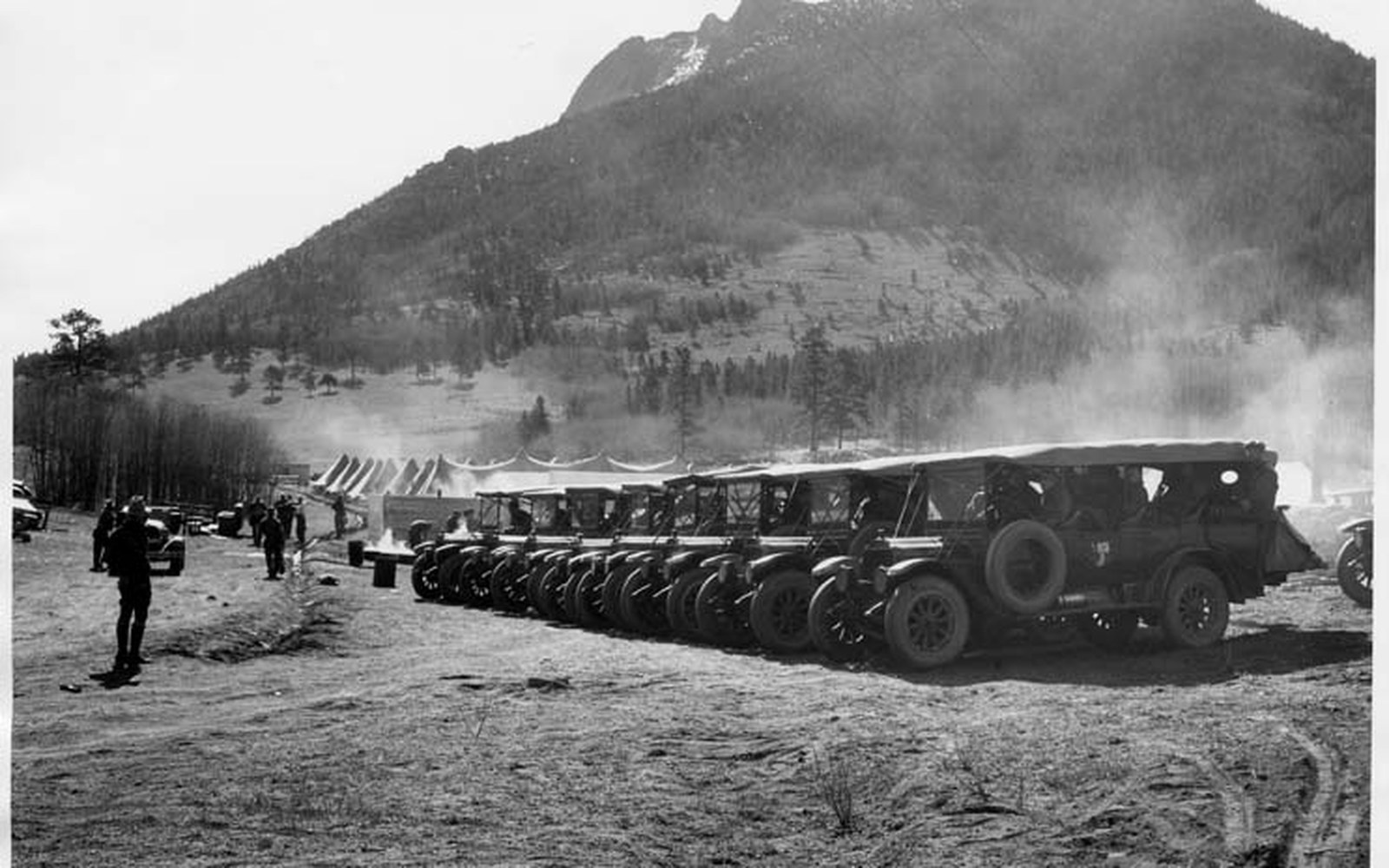
A Civilian Conservation Corps motor pool. Enrollees lived in camps that moved as the line advanced.
Photo: Rocky Mountain National Park, Civilian Conservation Corps workers ready to depart (2) · Wikimedia CommonsPolitical pressure and the tempo of construction
That pressure had lasting consequences for the road itself. The Parkway's construction was never managed as a single, sequenced project moving from one end to the other. Instead, work broke out simultaneously at multiple points along the 469-mile corridor, wherever federal money had been allocated, wherever CCC camps were placed, wherever a local congressman had secured a commitment. The result was a construction programme that ran, in fits and starts, across more than five decades — from 1935 until the final section was completed with the opening of the Linn Cove Viaduct in 1987.
This fragmented pattern explains some of the road's visible inconsistencies. Sections built in the late 1930s and early 1940s reflect the design principles established by the Parkway's first landscape architect, Stanley Abbott, who had joined the project in 1934 and whose influence shaped everything from the width of the mowed margins to the choice of native plant species for roadside restoration. Sections built later — after Abbott left, after the CCC was dissolved in 1942 when wartime mobilisation absorbed its workforce — sometimes carry a slightly different character, even when they follow the same written design standards.
The dissolution of the CCC in 1942 is a punctuation mark in the construction story. The camps that had housed thousands of workers were dismantled or converted to other uses; the labour force dispersed. For the duration of the war, construction on the Parkway effectively stopped. Some sections that had been graded but not paved sat exposed to erosion. Work resumed after 1945, but the scale and the political urgency were different. The New Deal imperative — employment as the primary goal — was gone. What remained was the incomplete road, the design standards, and the National Park Service's long-term obligation to finish it.
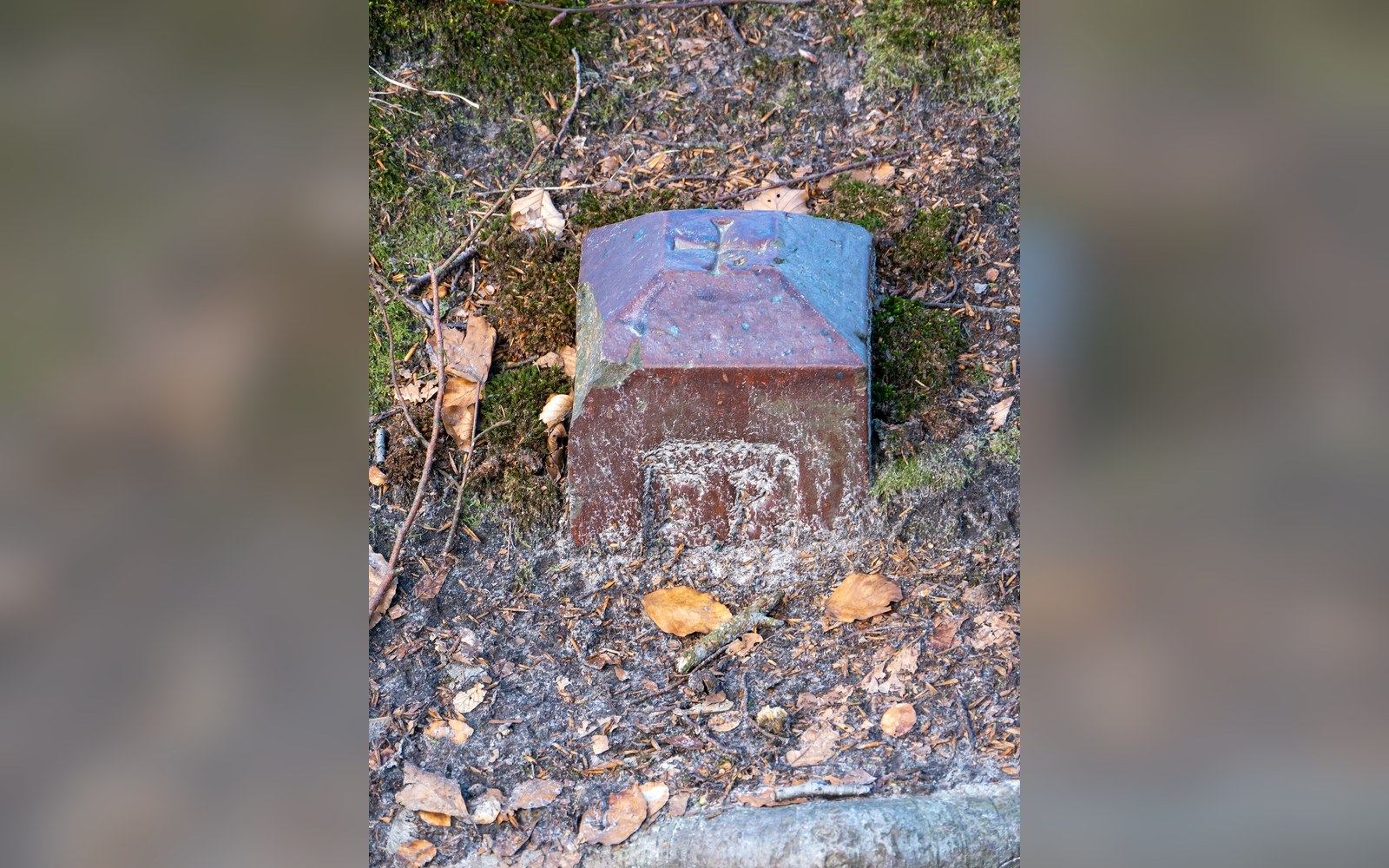
A survey marker. Where the line finally fell was settled on paper years before it was cut into ground.
Photo: Marker, Binz (P1090698) · Wikimedia CommonsWhat the emergency origin left behind
The public-works genesis of the Parkway shaped not just how it was built but what it was built to exclude. The prohibition on commercial traffic and roadside business is often described as an aesthetic principle, and it is — but it was also a labour-market decision. A road that could be used by commercial haulers or lined with private businesses would have been harder to justify as pure public relief. Keeping it scenic kept it clearly federal, clearly non-commercial, and clearly a project rather than an infrastructure investment in the ordinary sense.
The scenic easements that protect the views from the road were another instrument developed partly under this logic. Rather than acquiring full title to all adjacent land — an expense that would have been politically impossible — the federal government purchased easement rights over private holdings, restricting what landowners could build or clear within sight of the road. This was legally novel enough in the 1930s that the Parkway became a test case for the instrument, and the easement model it developed has since influenced scenic road protection across the United States.
The stone construction visible throughout the Parkway — the rough-faced parapets, the coursed-rubble culvert headwalls, the portal surrounds on the twenty-six tunnels — is both an aesthetic choice and a record of available labour. Cut stone is slower and more expensive than poured concrete in normal economic conditions. In Depression conditions, with men available and wages supported by federal relief programmes, it was the right material: it absorbed labour-hours, it lasted, and it looked like something worth building. The National Park Service's rustic design principles had already established the vocabulary; the CCC workforce gave the Parkway the means to execute it comprehensively.
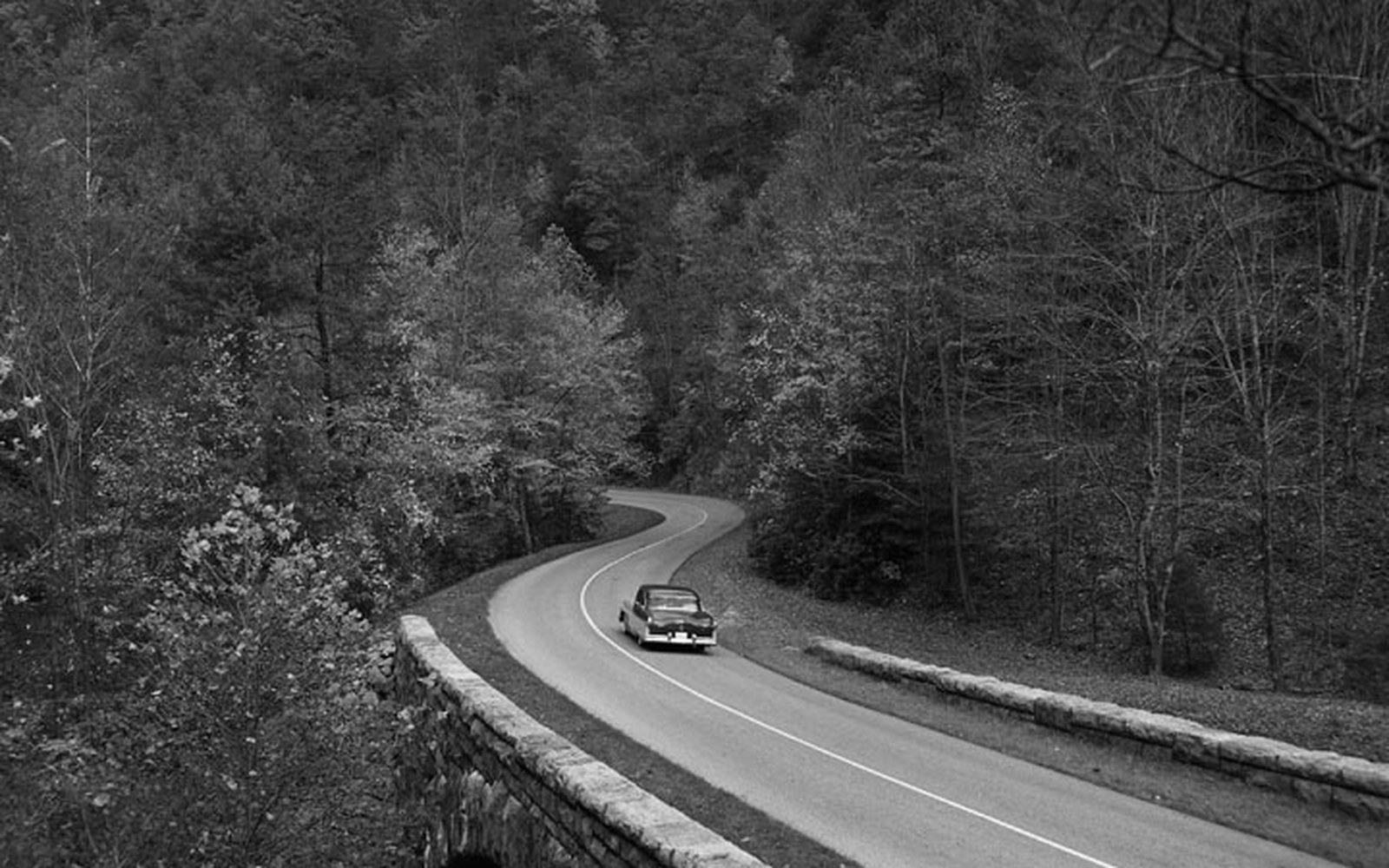
Dry-laid stone at the Humpback Rocks farm museum. Parkway masonry was specified to look older than the road it belongs to.
Photo: BLRI 58-JB-1055 · Wikimedia CommonsWhat strikes a driver now — the consistency, the finish, the sense that even small details have been attended to — is partly the result of that economic emergency. Scarcity of money was matched by abundance of time and hands. The pressure to employ people was also, paradoxically, the pressure to do things well. A project justifying itself as public relief had to produce something visible and durable. The Blue Ridge Parkway has outlasted the crisis that created it by nearly ninety years, which suggests the justification held.
More in The Build