High Ground / Why the road is where it is
A heath bald that is not a natural clearing
The heath balds at Craggy Gardens are open ground whose origin is still argued, and the rhododendron display is what draws the traffic.
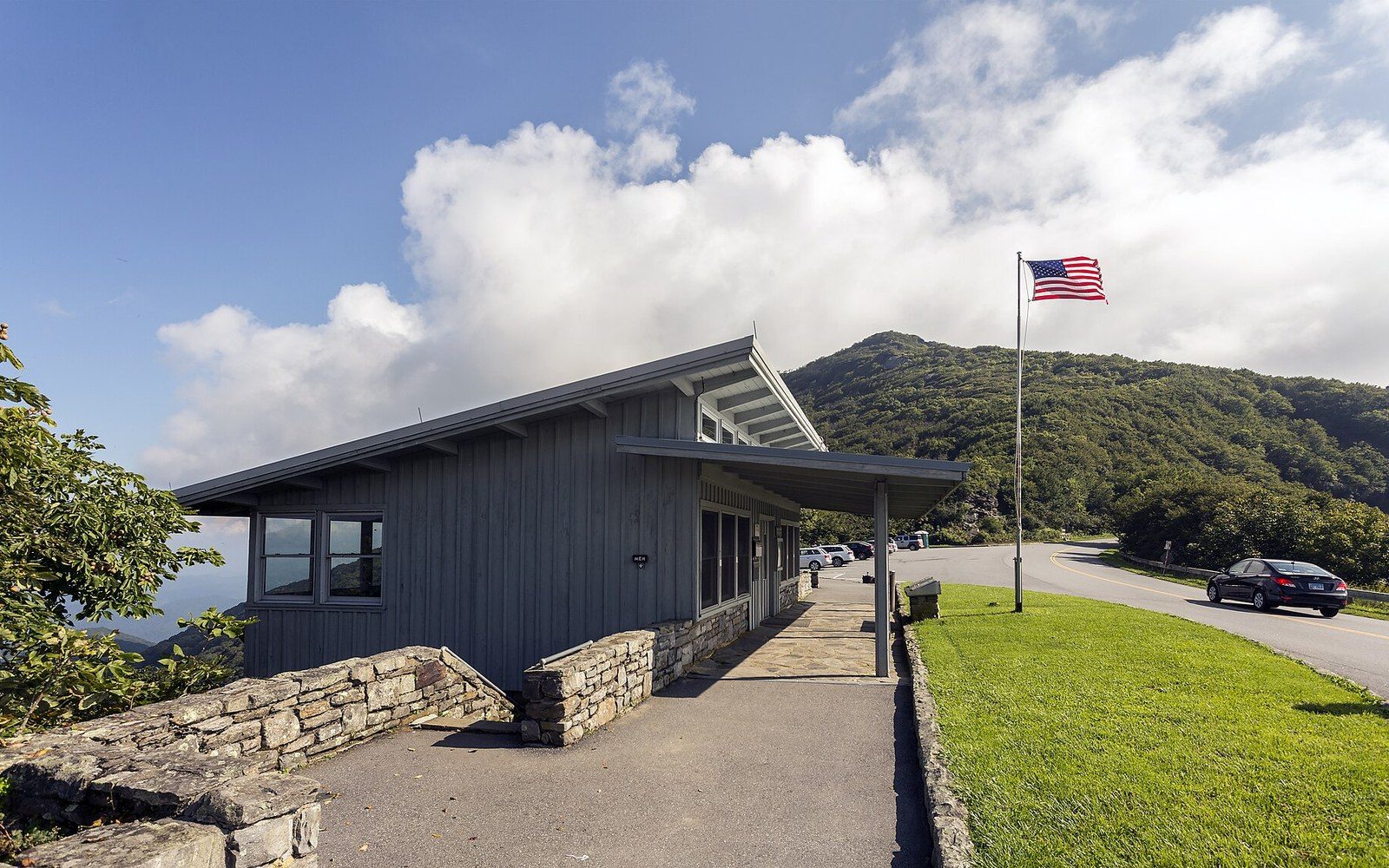
Craggy Gardens, milepost 364. The visitor centre sits on the shoulder of a bald nobody has satisfactorily explained.
Photo: Craggy Gardens NC1 · Wikimedia CommonsThe open ground that shouldn't be there
At around 5,500 feet, Craggy Gardens sits well below the treeline that the climate alone would produce. Walk the short trail from the Craggy Gardens Visitor Center, near milepost 364, and you emerge onto open heath where the view runs unobstructed across ridge after folded ridge. Nothing about the altitude explains why the trees stop. The Appalachians are old enough and worn enough that their summits should, at this elevation, carry forest. At Craggy Gardens, they don't — and ecologists have been arguing about why for most of a century.
The term for what you're standing on is a heath bald: a mountaintop opening dominated by ericaceous shrubs — rhododendron, mountain laurel, blueberry — rather than trees, and sitting well below the elevation at which climate alone would prevent forest. The word "bald" is Appalachian English for any such clearing on high ground, and the heath balds of the southern Blue Ridge are distinct from the grassy balds further south, which are another argument entirely. What they have in common is that neither variety is fully explained.
The competing theories for heath balds are well rehearsed. One holds that Indigenous burning maintained the clearings over centuries, suppressing tree regeneration in places used for hunting or visibility. Another points to catastrophic disturbance — wind events, ice storms, disease — opening the canopy at some historical moment, after which the ericaceous mat became so dense and so chemically hostile to tree seedling establishment that forest recovery stalled permanently. A third attributes the openings partly to soil conditions: the thin, highly acidic soils under dense rhododendron resist the seedlings of canopy trees so effectively that the shrub layer becomes self-perpetuating. The National Park Service's own vegetation research acknowledges the question as open, noting that heath balds likely reflect a combination of disturbance history and subsequent plant community dynamics rather than a single cause.
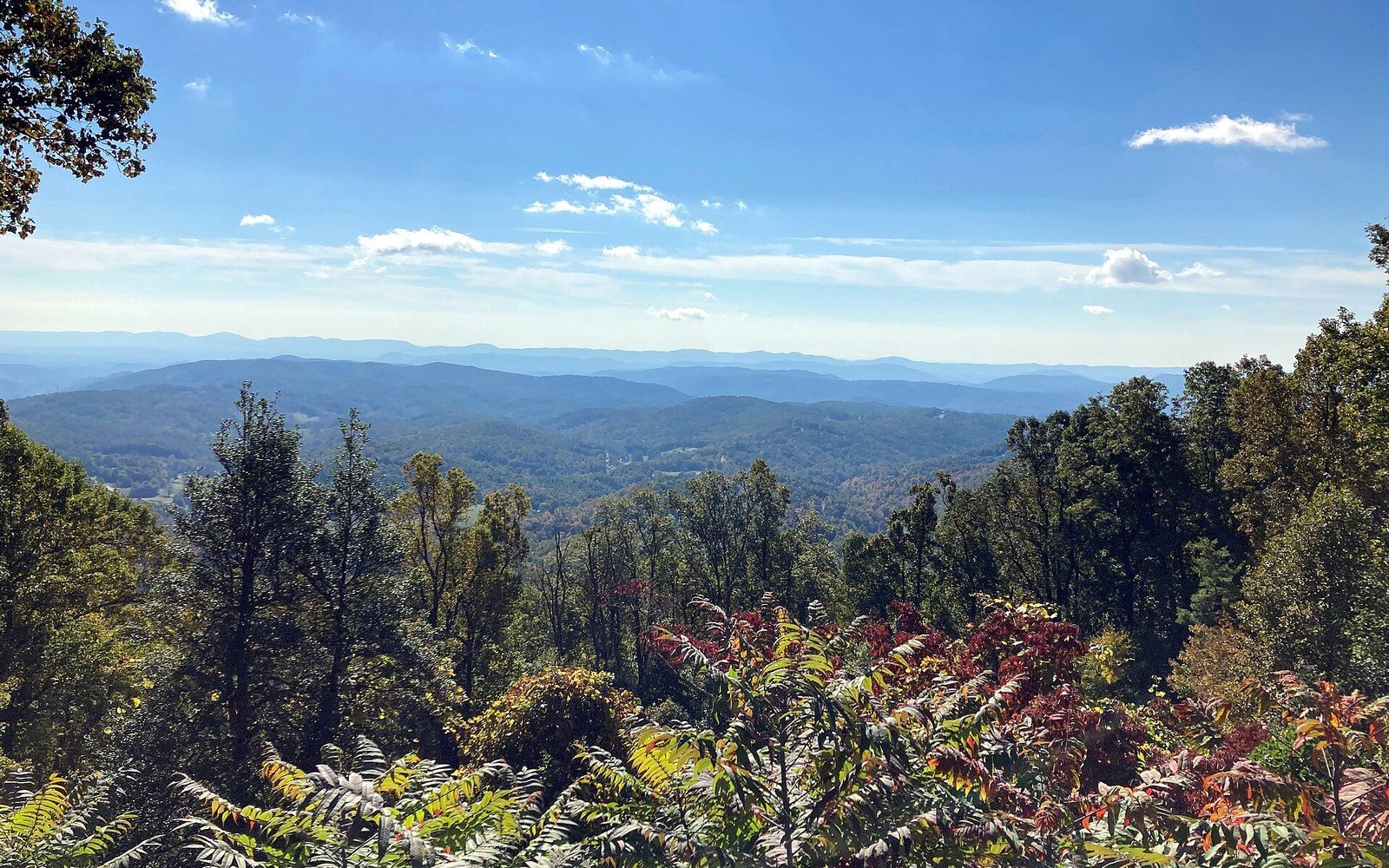
Stoney Fork Overlook. Holding the crest meant cutting benches into slopes a valley road would have avoided entirely.
Photo: Blue Ridge Parkway October 2022 1 (Stoney Fork Overlook) · Wikimedia CommonsWhy June traffic is heavier than usual
What none of this uncertainty does is reduce the spectacle. Catawba rhododendron — Rhododendron catawbiense — is the dominant shrub at Craggy Gardens, and it flowers in mid-to-late June in massed, deep-pink blooms across the full width of the bald. The timing varies by a week or two year to year depending on the spring's temperature, but the display, when it arrives, is visible from the Parkway itself as a pink wash across the upper ridge. It is one of the two or three most photographed moments on the entire 469-mile road, and it was part of the reason this section of the Blue Ridge Parkway ↗ was routed at this elevation in the first place — the designers understood what would be visible from the road in June.
That is characteristic of the Parkway's logic throughout. The route does not merely pass through scenery; it was drawn to intercept particular views at particular seasons. The elevation profile at Craggy Gardens is not incidental. The road is held high precisely because high ground, in this part of the southern Appalachians, produces open vegetation, open vegetation produces unobstructed sightlines, and June turns those sightlines pink. It is a designed experience arriving at terrain that science cannot fully account for.
The heath itself is fragile in ways the footfall disguises. The ericaceous mat holds its own moisture, builds its own acidic duff layer, and shades out almost everything that might compete with it — but the trail edges compact, the rootmat erodes, and the shrub community retreats where pressure is sustained. The ecology that draws visitors is the same ecology that cannot absorb unlimited visits. That the openings persist at all is partly an accident of history, partly soil chemistry, and partly — perhaps — the maintenance of a tradition of disturbance so old that its origins are no longer visible from the road.
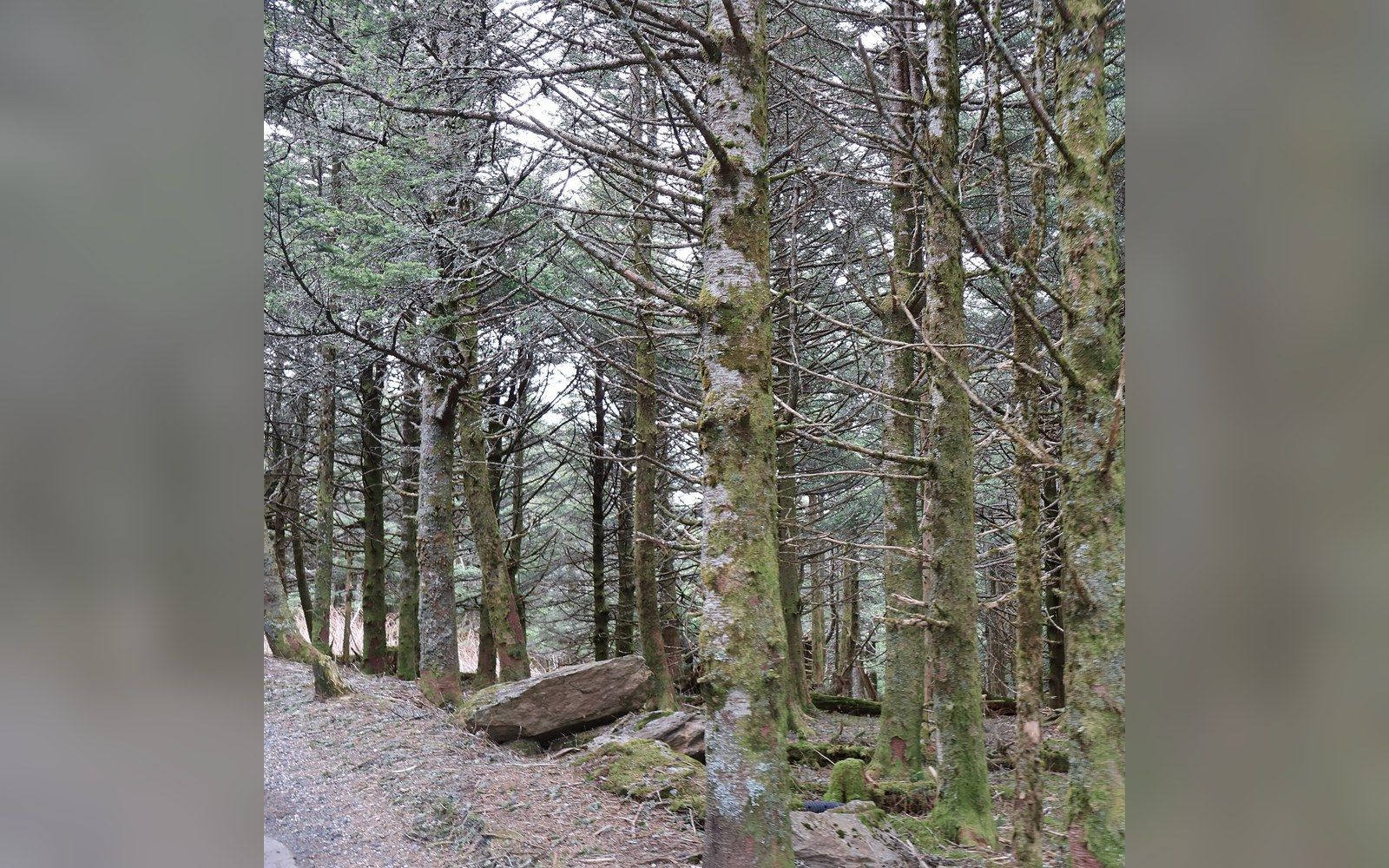
The summit trail on Mount Mitchell. The fir here is Fraser fir, which grows nowhere outside the southern Appalachians.
Photo: Mount Mitchell Summit Trail (March 2023) · Wikimedia CommonsMore in High Ground