Mileposts / How the road is described
The most photographed thing on the road
Mabry Mill at milepost 176 is a preserved water-powered mill and is the single most photographed structure on the Parkway.
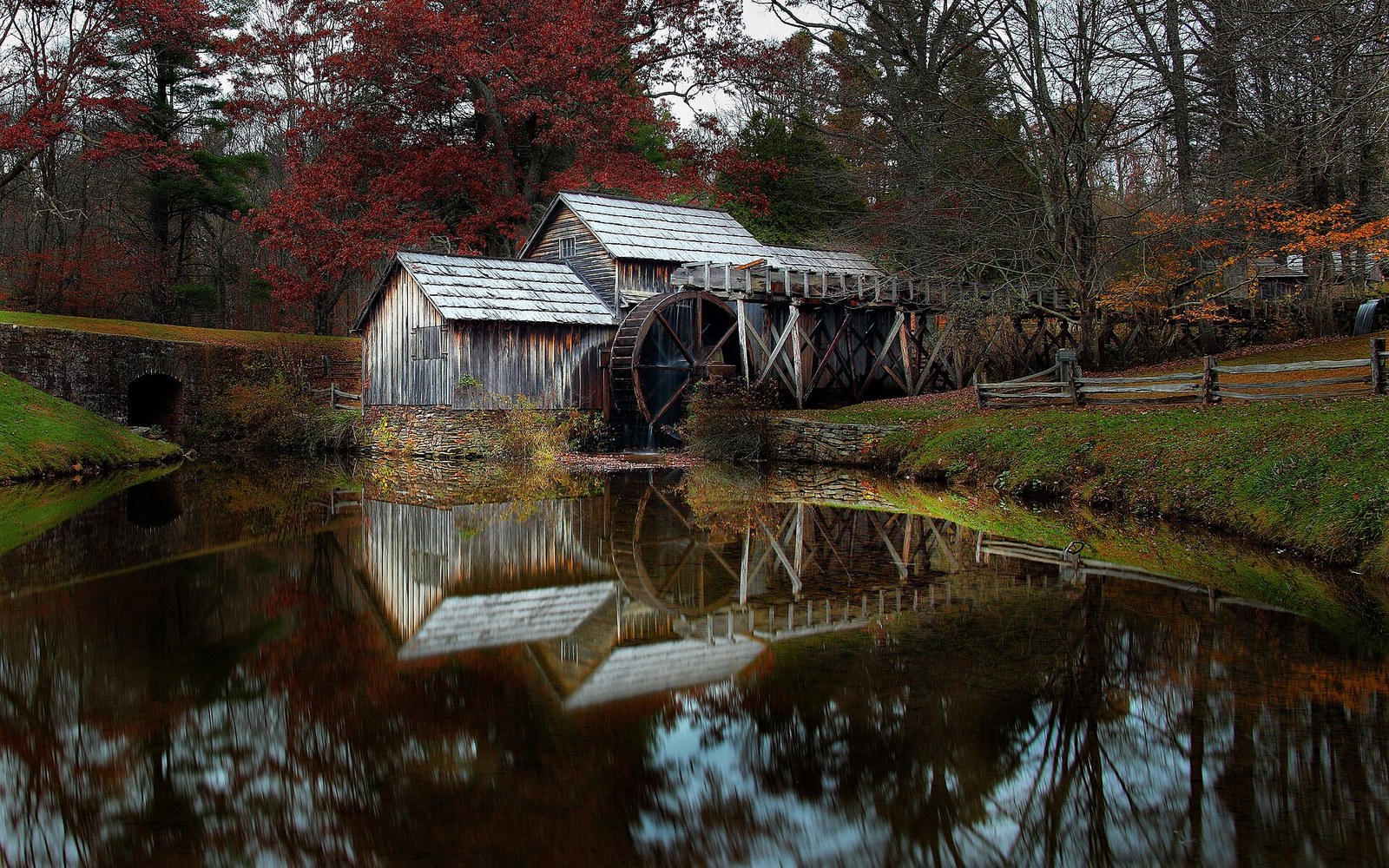
Mabry Mill, milepost 176.1. The most photographed building on the Parkway, and a working mill first.
Photo: Mabrys-mill-hdr - Virginia - ForestWander · Wikimedia CommonsA working mill frozen at milepost 176, and why every camera on the Parkway finds it.
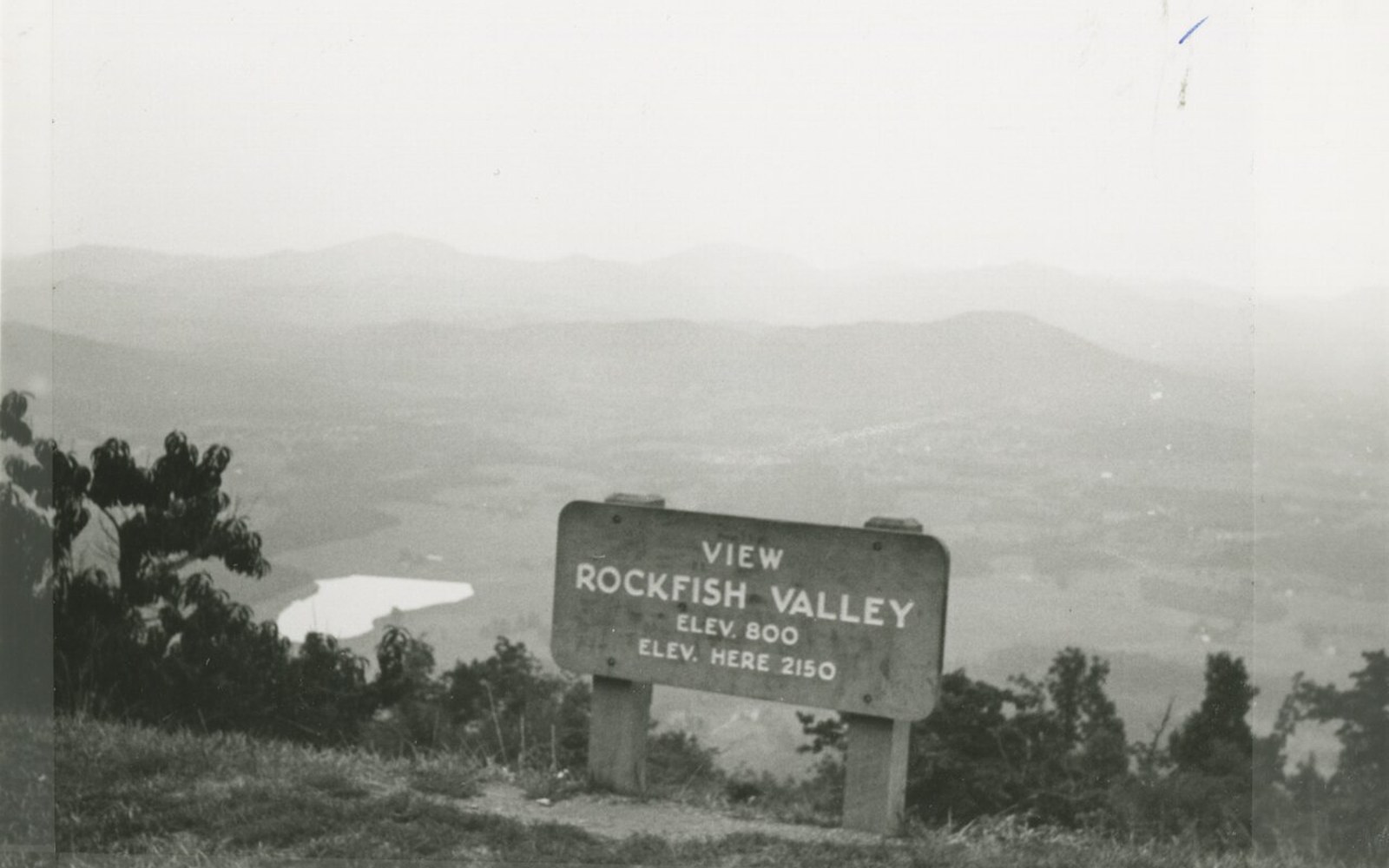
Milepost 0.2. Every number on the road counts from here, southward, and only southward.
Photo: Blue Ridge Parkway, Milepost 0.2 (8aae5bb1cf4c49ad8e2e5ea5a1e458c7) · Wikimedia CommonsWhat you are looking at
The pond is shallow, the wheel turns slowly, and the weathered chestnut-log structure behind it sits low against a hillside so typical of the Virginia plateau that the whole composition seems arranged rather than found. At milepost 176.1 on the Blue Ridge Parkway, Mabry Mill is the single most reproduced image the road has produced — a fact the National Park Service has acknowledged for decades and that any gift shop between Rockfish Gap and Asheville will confirm silently through its postcard rack.
Ed Mabry built the mill in the early twentieth century, cutting and fitting the timber himself after years of working as a blacksmith and wheelwright ↗. He and his wife Lizzie ran it as a working enterprise — grinding corn and wheat, sawing lumber, processing wool — until age and declining health forced them to stop around 1935. The timing mattered. The Blue Ridge Parkway's construction programme began that same year, and the National Park Service acquired the site shortly after, recognising that the mill represented exactly the kind of vernacular Appalachian industry the road was intended to memorialize.
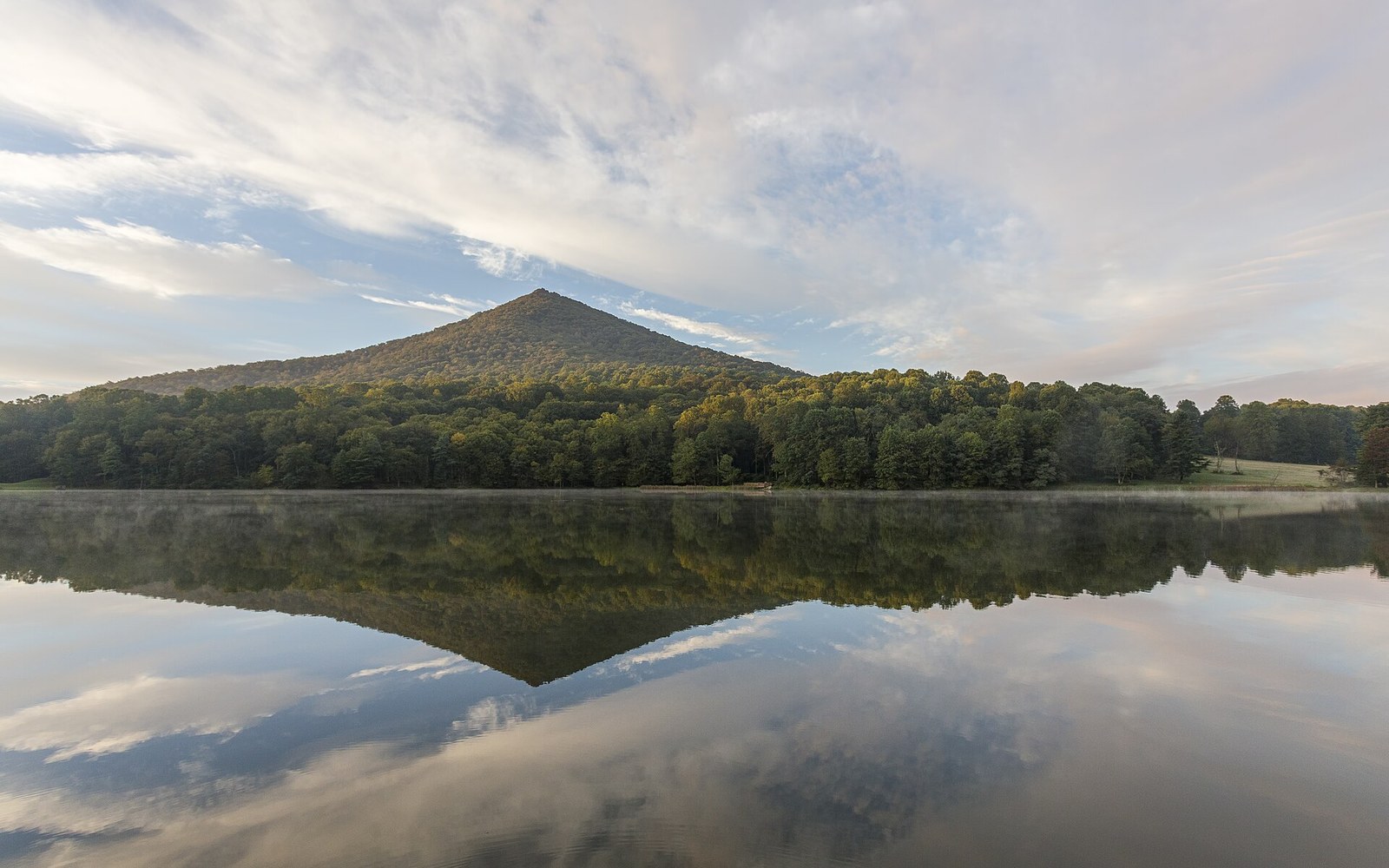
Sharp Top across Abbott Lake. People were coming here a century before the road did.
Photo: Sharp Top VA1 · Wikimedia CommonsWhy this one
Every visual element reinforces every other. The millpond, fed by a small creek, gives a still foreground that doubles the wheel and the log structure in reflection when conditions are right. The wheel itself — an overshot design, meaning the water strikes it from above rather than below — is large enough to dominate the frame without overwhelming it. The surrounding landscape of split-rail fence, weathered outbuildings, and open meadow supplies context without clutter. Crucially, the viewpoint is close and level: you approach from a short flat path and the mill simply appears, fully composed, at something close to eye height. There is no bad angle and no awkward foreground to manage.
The National Park Service has maintained the mill as a working demonstration site ↗, which means the wheel actually turns — slowly, under real water — rather than sitting static as a relic. That kinetic element is part of what makes it work photographically. A turning wheel implies time; a still photograph of something that moves has a compression that a photograph of something inert does not.
The seasonal behaviour of the site amplifies this. Morning fog across the millpond is a documented phenomenon at this elevation — the Blue Ridge plateau sits at roughly 2,900 feet near milepost 176 — and the fog, the still water, and the slow wheel produce conditions that photographers have sought out since at least the 1940s. The autumn colour of the surrounding woodland adds a further register: the mill has been reproduced in so many different seasonal states that it functions almost as a record of the Parkway's year.
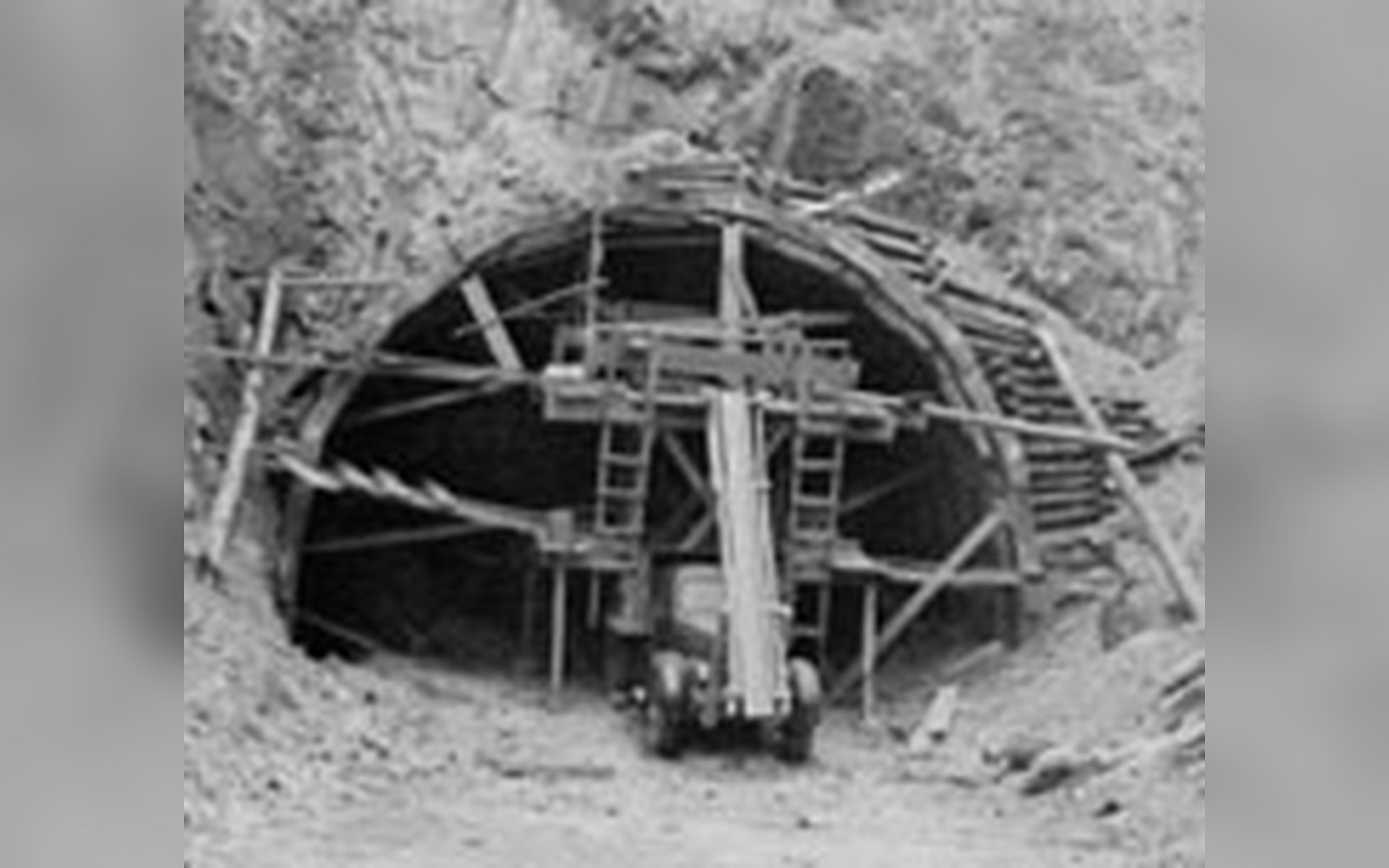
Tunnel construction on the Parkway. Twenty-six were driven, twenty-five of them in North Carolina.
Photo: Blue Ridge Parkway - Tunnel Building on the Blue Ridge Parkway - NARA - 7717417 · Wikimedia CommonsThe designed setting
None of this is entirely accidental. The Parkway's landscape architects — the road was unusual for having them, working alongside the engineers from the earliest surveys — understood that the mill's value was scenic as well as historical. The approach road, the parking area, and the path to the water's edge were all laid out to present the view in a specific sequence: you park, you walk, the mill resolves. There is no moment at which you see it badly. That orchestration of approach and reveal is the same principle at work along the entire road, applied here to a single fixed subject rather than a moving panorama.
The mill also anchors a small complex of relocated and reconstructed outbuildings — a distillery, a sorghum press, a woodworking shop — that together create the impression of a self-sufficient mountain farmstead. Scholars of material culture have noted that the assemblage is curatorial rather than strictly archaeological; the buildings did not all stand here originally. But the effect is coherent, and coherence is what the camera finds.
What the Parkway set out to preserve at Mabry Mill was not just a structure but a complete visual argument about how mountain life once organized itself around water, wood, and the slope of the land. That argument is still legible, still turning, and still, reliably, the thing every driver stops to frame.
More in Mileposts