Music / The country it runs through
Why the recordings matter
Field recordings fixed performances that were otherwise unwritten, which is why specific singers and specific dates can be cited at all.
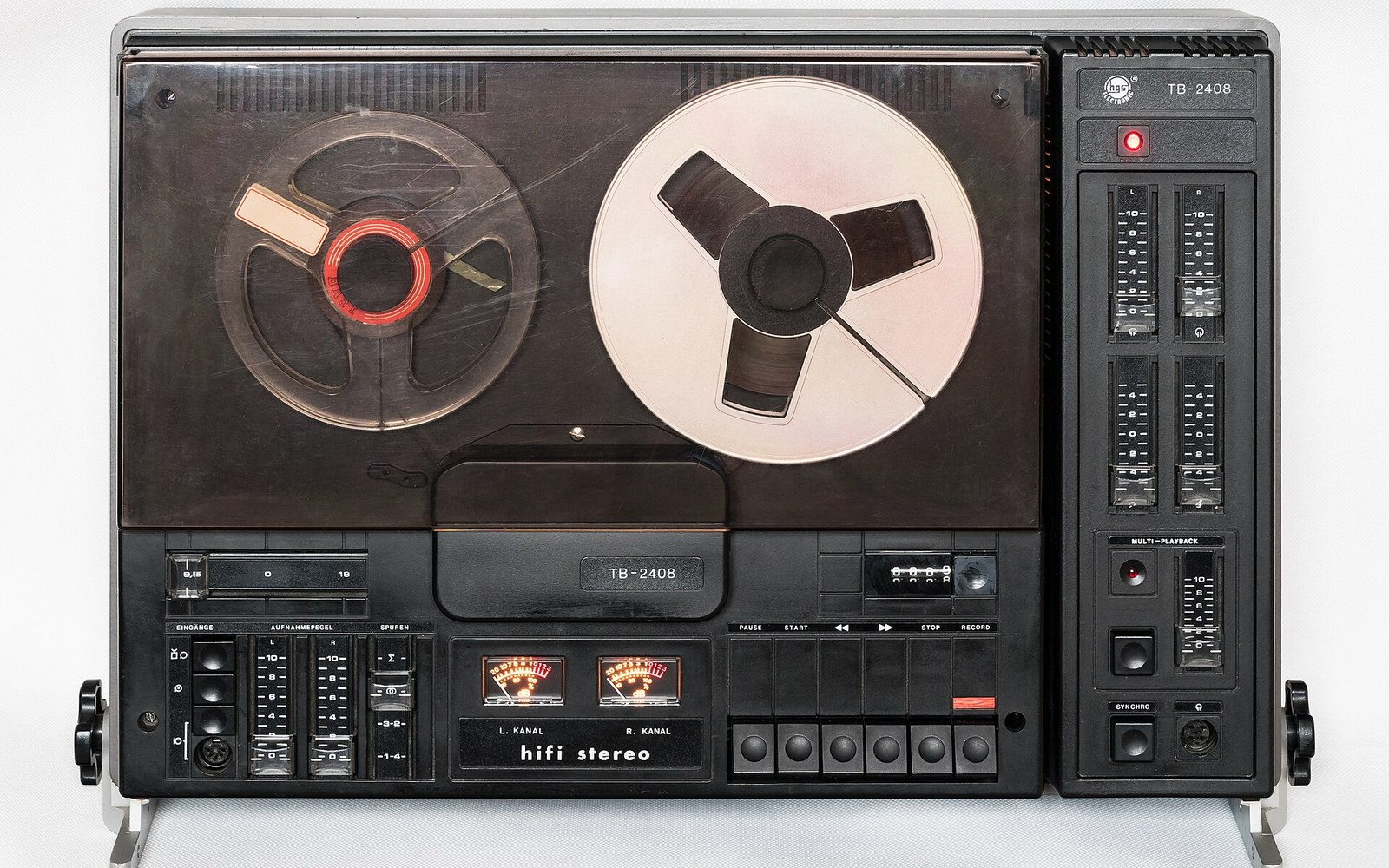
A reel-to-reel machine. Before tape, a performance nobody wrote down was not kept.
Photo: 2017 Magnetofon szpulowy Aria M 2408 SD · Wikimedia CommonsSound that would otherwise be gone
A song passed by ear leaves no trace unless someone writes it down or catches it on tape. For the music of the southern Appalachians, the tape — or more precisely, the wire and the acetate disc and the reel-to-reel — arrived just in time. Field recordings made from the 1920s onward fixed performances that existed nowhere in notation, by singers who had learned from singers who had learned from singers, across a chain that ran back further than anyone could trace. Without those recordings, the names attached to specific melodies would be guesswork. With them, a scholar can say: this version, this singer, this county, this year.
The work began seriously with collectors who understood that the mountain repertoire was not static but actively dissolving into a broader American popular culture. Cecil Sharp had already moved through the region between 1916 and 1918, transcribing melodies and texts in the old way — notation and pencil — but transcription catches the skeleton of a song and loses the body. The ornaments, the timing, the particular drag on a vowel that makes one singer's version of "Barbara Allen" unlike any other: none of that survives on paper. The Library of Congress's Archive of Folk Culture ↗ holds some of the most consequential results of what came next, when collectors arrived with recording equipment and captured living voices instead.
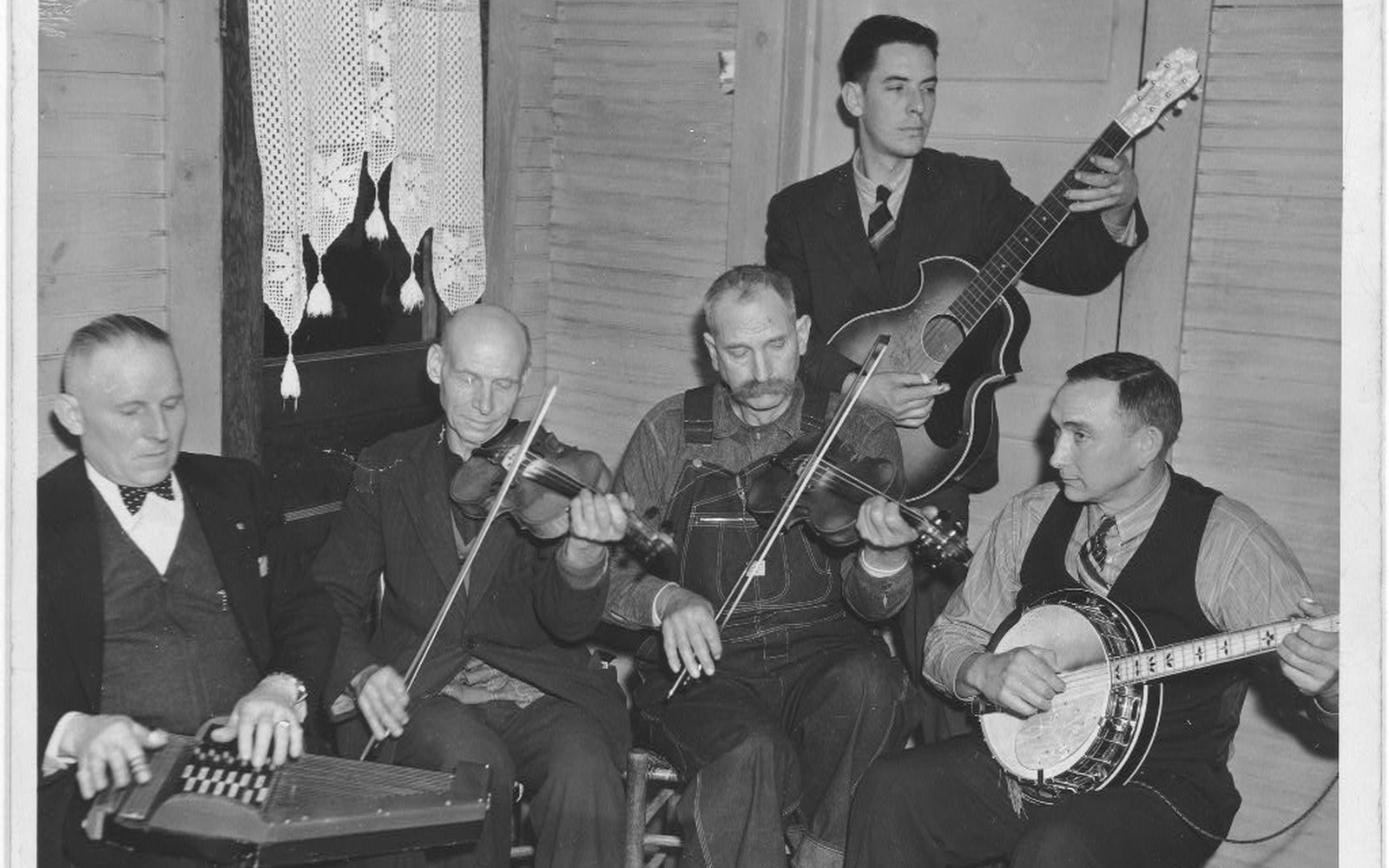
A Virginia string band in 1937. Zither, two fiddles, guitar and banjo — the instrumentation collectors kept finding.
Photo: Virginia-stringband-1937 · Wikimedia CommonsWhat the machines made possible
Alan Lomax and his father John Lomax worked across the American South and into Appalachia with field recorders from the mid-1930s, producing acetate discs that the Library of Congress preserved. Their methods were imperfect and their assumptions about authenticity were sometimes paternalistic, but the recordings themselves are irreplaceable. A singer named Texas Gladden, recorded in Salem, Virginia, in 1941, can be heard performing ballads in a tradition that had never been commercially recorded. Without that session, her name would not attach to anything a researcher could hear.
The same logic applies to instrument styles. Clawhammer banjo — the downward striking technique that predates bluegrass picking — survives as a documented, datable practice partly because collectors recorded players who had learned it before the commercial recording industry arrived with its own preferences. The style can be heard evolving, or rather not evolving: held in a particular form in a particular hollow, unchanged because the people there had no reason to change it. Commercial recording would have smoothed that out. Field recording preserved the roughness, which is the point.
The Blue Ridge Music Center, which sits near milepost 213 on the Parkway, exists in direct relationship to this archival effort. The institution's mission to sustain old-time music and Blue Ridge traditions depends on being able to say what those traditions actually sound like — and that depends on the recordings. A living tradition without documentation collapses into romance: everyone agrees it was wonderful, no one can say what it was.
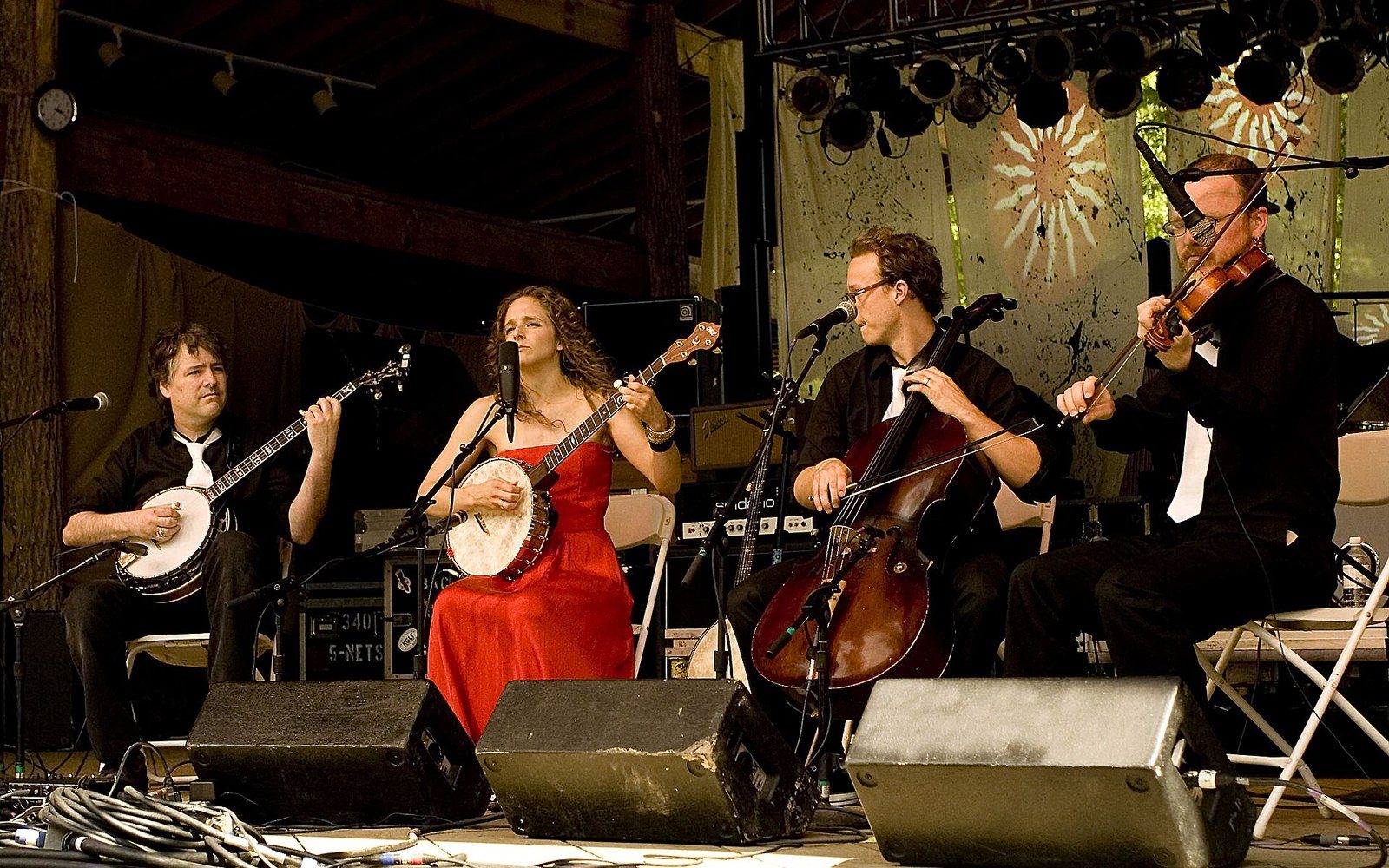
A banjo on stage. The clawhammer technique played in these mountains descends from African American practice.
Photo: Sparrowquartet · Wikimedia CommonsThe specificity that recordings give
What field recording produces, above all, is specificity. Not "Appalachian folk music" as a category but individual named performances ↗ that can be cross-referenced, compared and argued over. Scholars working on the repertoire can trace variants of a single ballad across counties and decades, watching the story change — a name altered here, a verse dropped there — in ways that reveal how communities heard and remembered. That kind of analysis requires dateable, attributable recordings. Anecdote will not do it.
The music of the country the Parkway runs through is sometimes treated as scenery: atmosphere to accompany the view. The recordings refuse that. They are evidence, not mood. They fix a Sarah Ogan Gunning or a Dillard Chandler as a specific artist with a specific style, not a representative of something vague. The dates matter because they locate a performance in history. The names matter because they restore agency to people who were sometimes written about as though they were landscape rather than musicians. That is what the recordings do that no amount of description can: they let you hear the person, not the type.
More in Music