The Rules / The rules that keep it looking like this
Slow on purpose
The low speed limit is part of the design rather than a safety retrofit — the geometry was drawn for a driving pace, not a travel time.
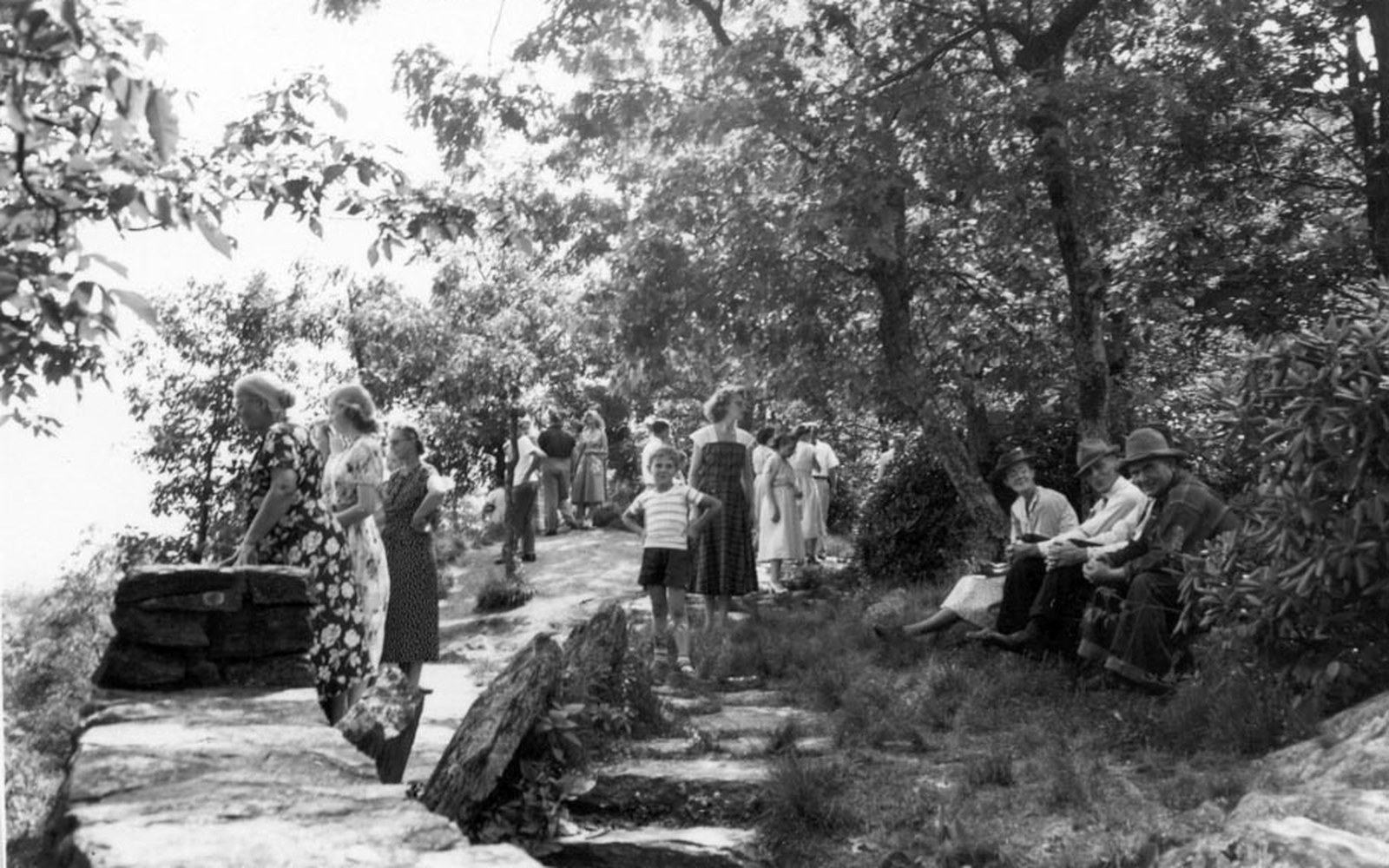
Wildcat Rocks Overlook at Doughton Park in 1951. The overlook was built in 1939, for traffic moving at 45.
Photo: Bluffs Lodge - Doughton Park. In this 1951 view, parkway visitors stop at Wildcat Rocks Overlook. The overlook was built in 1939. · Wikimedia CommonsThe 45 mph limit is not a concession to curves — it is the design speed, and the geometry was drawn around it from the start.
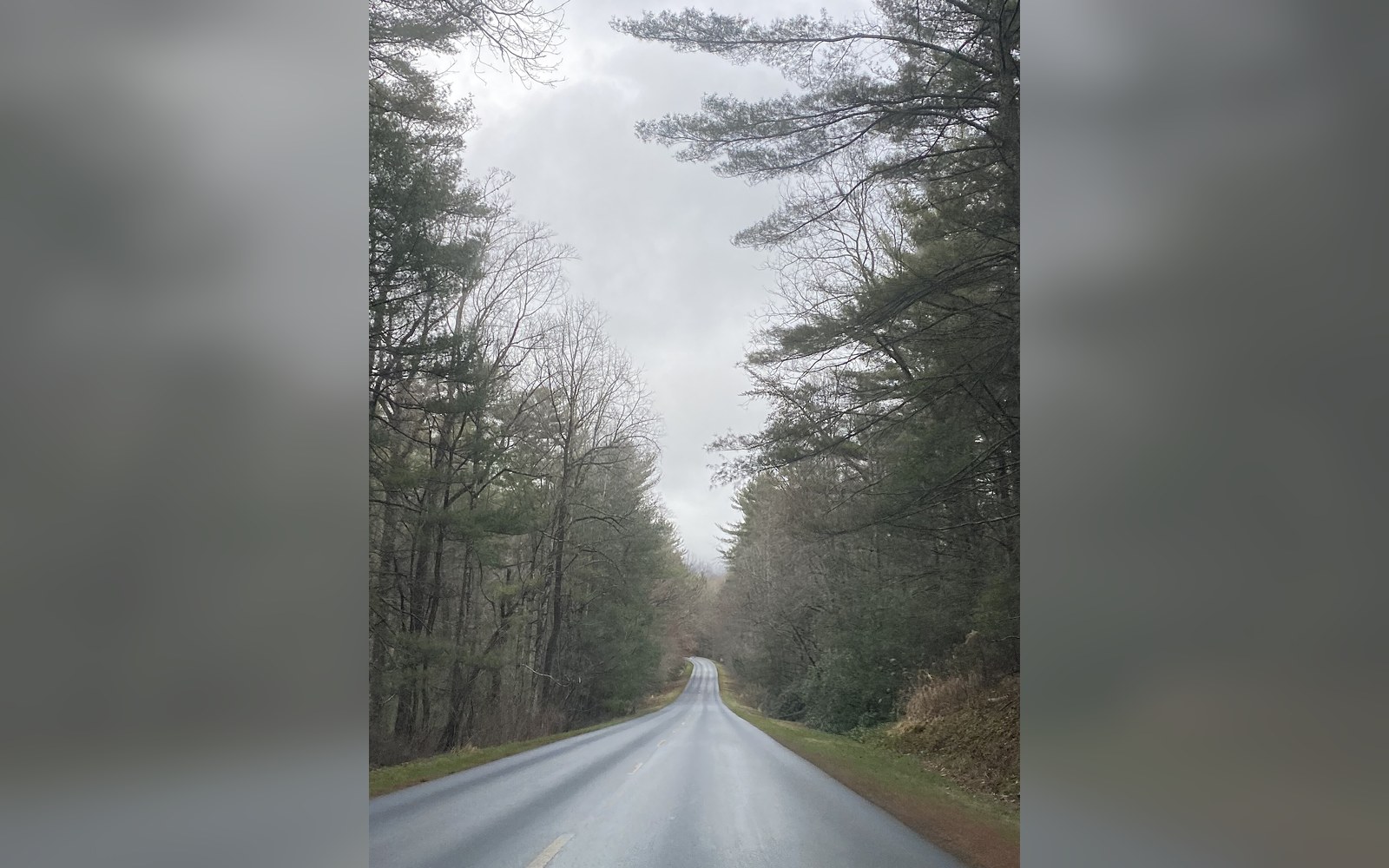
A wet morning near Asheville. No trucks, no signs, no frontage — the emptiness is the specification.
Photo: Blue Ridge Parkway- Asheville, NC on a rainy day · Wikimedia CommonsA Road Designed for Looking
Most American roads are calibrated for throughput: the geometry, the banking, the sight lines are all set to carry vehicles as fast as safely possible from one point to another. The Blue Ridge Parkway inverted that logic before a single shovel turned. When the National Park Service and its designers laid out the route in the mid-1930s, the target speed was not a ceiling imposed on an otherwise faster road — it was the generating number around which every curve radius, every grade, every transition was calculated.
The design speed settled on was 45 mph, and the posted limit matches it exactly. That correspondence is unusual. On most American highways, posted limits sit below the design speed to create a margin of safety. On the Parkway, they sit at it, because the point was never to accommodate faster travel — it was to make faster travel feel wrong in your hands. Curves tighten to radii that become mildly uncomfortable above 45. Crests roll into hollows with just enough vertical curvature to keep you reading the road rather than watching the horizon. The geometry is not negligent; it is purposeful.
The philosophical source of this is traceable. Landscape architect Stanley Abbott, who served as the Parkway's first resident landscape architect from 1934 onward, consistently argued that the road's speed should serve observation rather than transit. The Parkway was not meant to move people through the mountains efficiently — it was meant to move them slowly enough that the mountains registered. Abbott and his colleagues drew the road along ridge crests rather than valley floors precisely because the views from the high ground required a pace at which a driver could receive them.
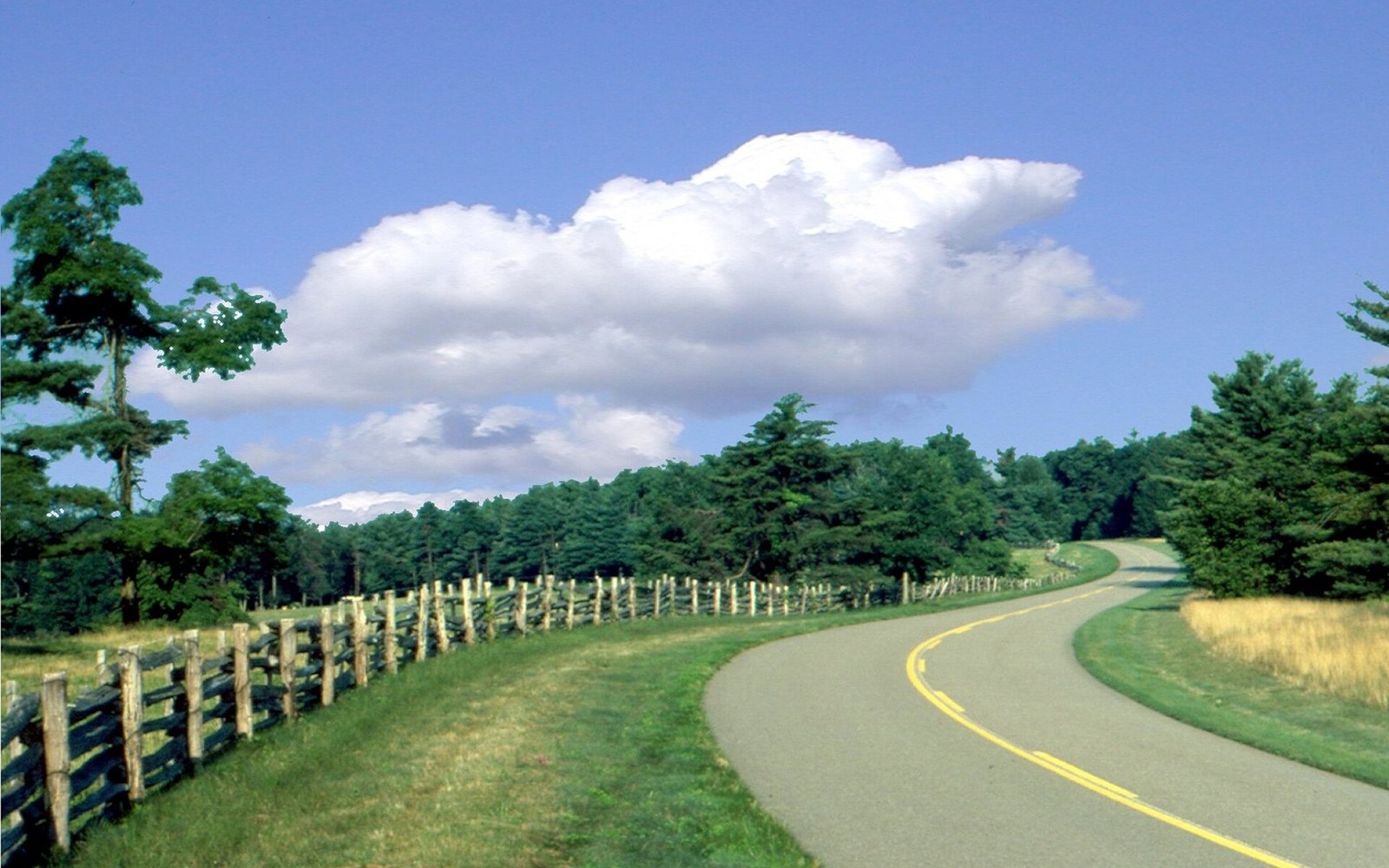
Split-rail fence along the Parkway. The field behind it belongs to somebody else; the view across it does not.
Photo: Blue Ridge Parkway - Split Rail Fences Along the Parkway - NARA - 7717426 · Wikimedia CommonsHow Geometry Enforces Pace
The enforcement mechanism is the road itself. A driver pushing to 60 mph on the Parkway does not feel heroic — the car begins to communicate resistance. Curves that flow at 45 develop mild understeer above it. The road's horizontal alignment includes compound curves: transitions between arcs of different radii that are tuned to feel natural at the design speed and slightly nagging above it. This is not an accident of the terrain. The designers had options about how sharply to cut transitions, and they consistently chose the option that rewarded the intended pace.
Vertical geometry does similar work. The Parkway's grades were capped at five percent on most sections, and crest curves — the parabolic arcs that carry the road over a ridge — were designed to be gentle rather than dramatic. That gentleness means a crest does not announce itself as a challenge to be apexed; it arrives as a transition to be eased through. The experience of cresting a ridge at 45 on the Parkway is qualitatively different from cresting one at 65 on an interstate: you arrive at the view rather than passing it.
The roadway width was another deliberate instrument. At 20 feet of pavement with narrow shoulders, the Parkway is thinner than a standard two-lane federal highway of its era. The reduced width increases the felt speed at any given mph — a perceptual effect that planners have since theorized extensively but that the Parkway's designers applied by instinct and precedent, drawing on experience with Skyline Drive ↗ to the north, which shares the same logic.
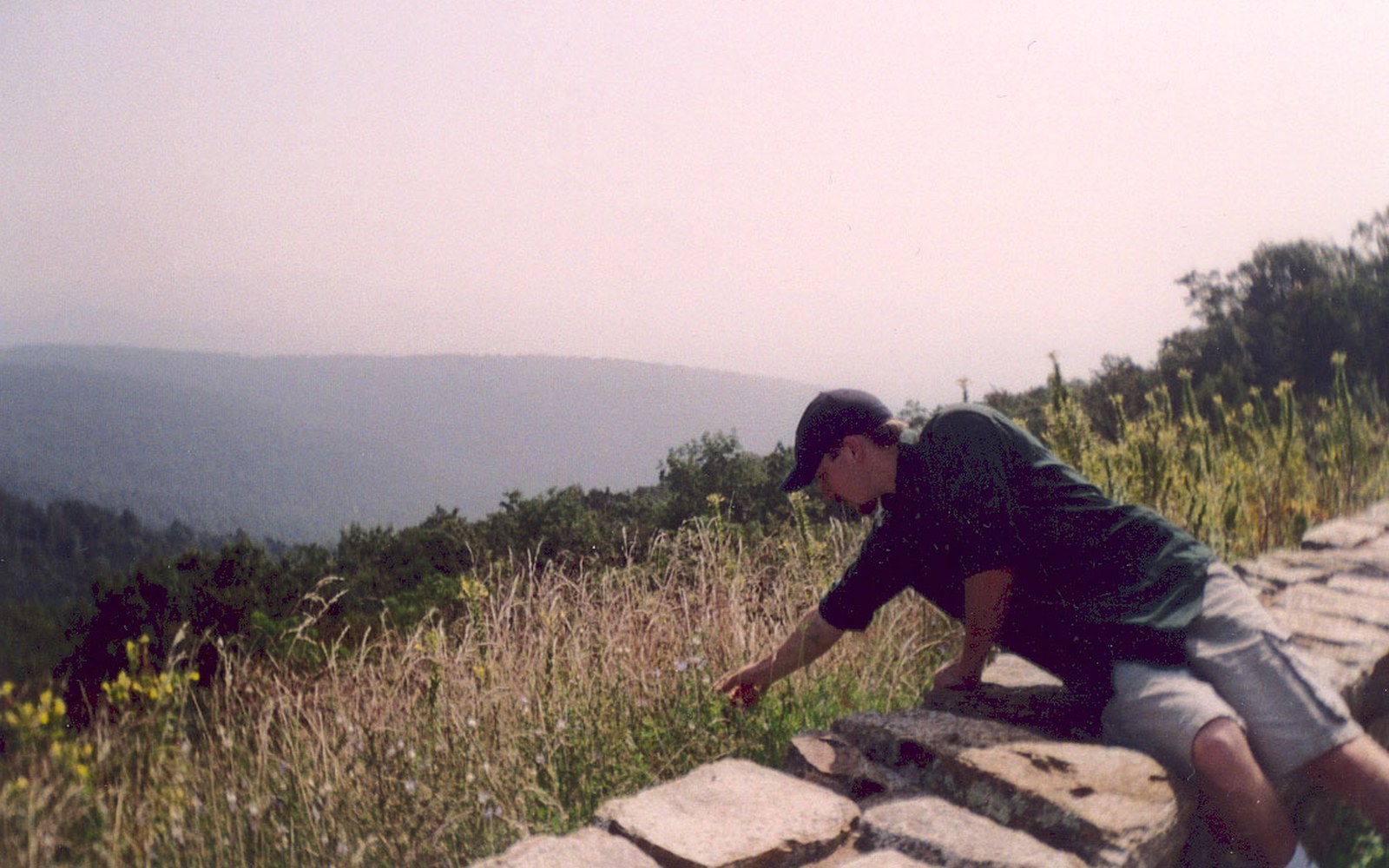
Wildflowers on a mown verge. The line where the mowing stops was drawn by a landscape architect.
Photo: Blue Ridge Parkway - Wildflower Interlude - NARA - 7717419 · Wikimedia Commons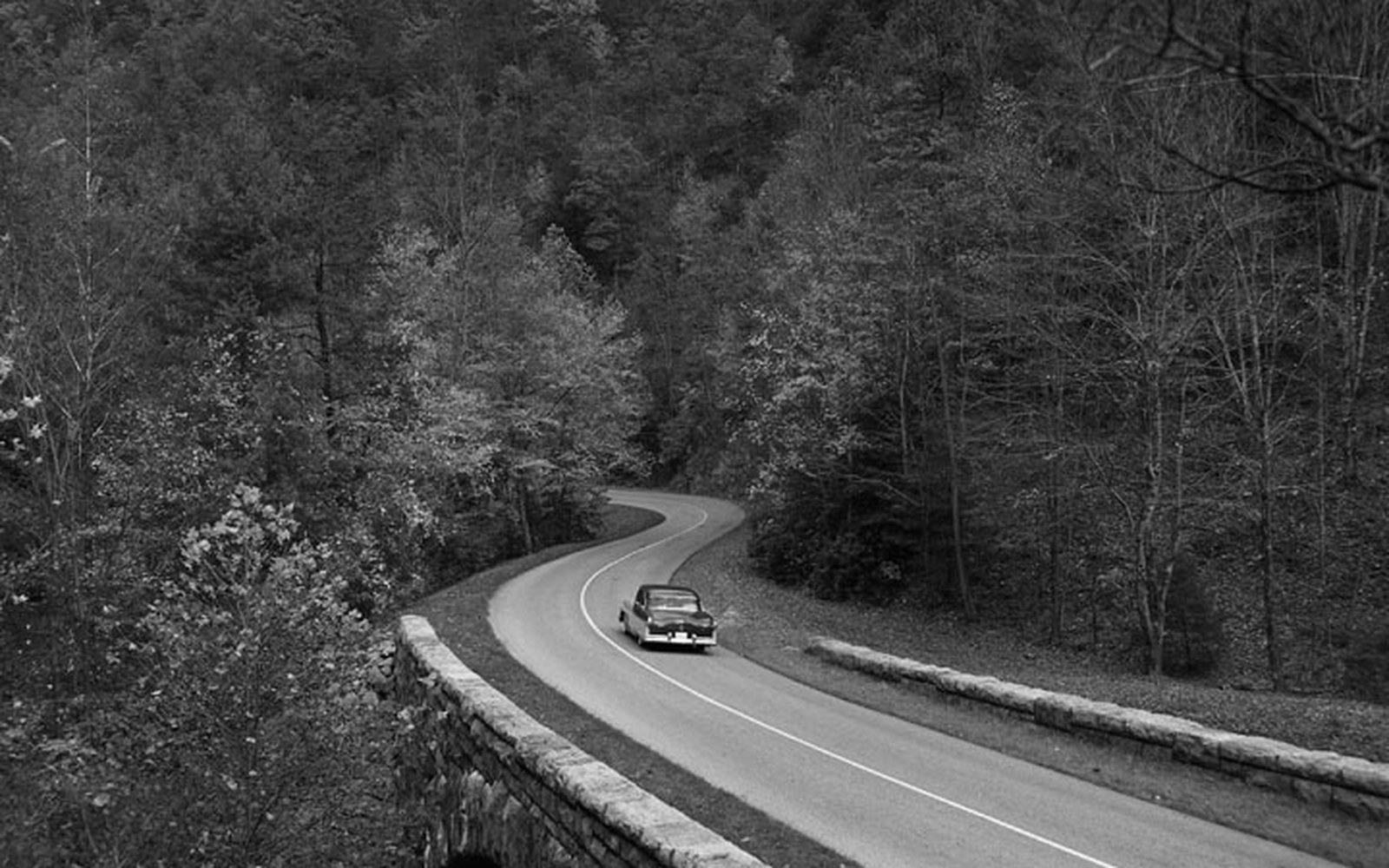
Dry-laid stone at the Humpback Rocks farm museum. Parkway masonry was specified to look older than the road it belongs to.
Photo: BLRI 58-JB-1055 · Wikimedia CommonsNone of this produced a timid road. The Parkway's 469 miles include genuine challenges — sweeping descents, tight S-curves through the hardwood understory, long grades in the southern sections toward the Great Smoky Mountains National Park — and drivers who treat the limit as a floor rather than a target will find them. But the road pushes back, consistently, toward the speed at which it was drawn.
The 45 mph limit on the signs is the last step in a design process that started at the drawing board. The road does not slow you down. It was never fast in the first place.
More in The Rules